The Role of Audio in Wedding Videography That Matters
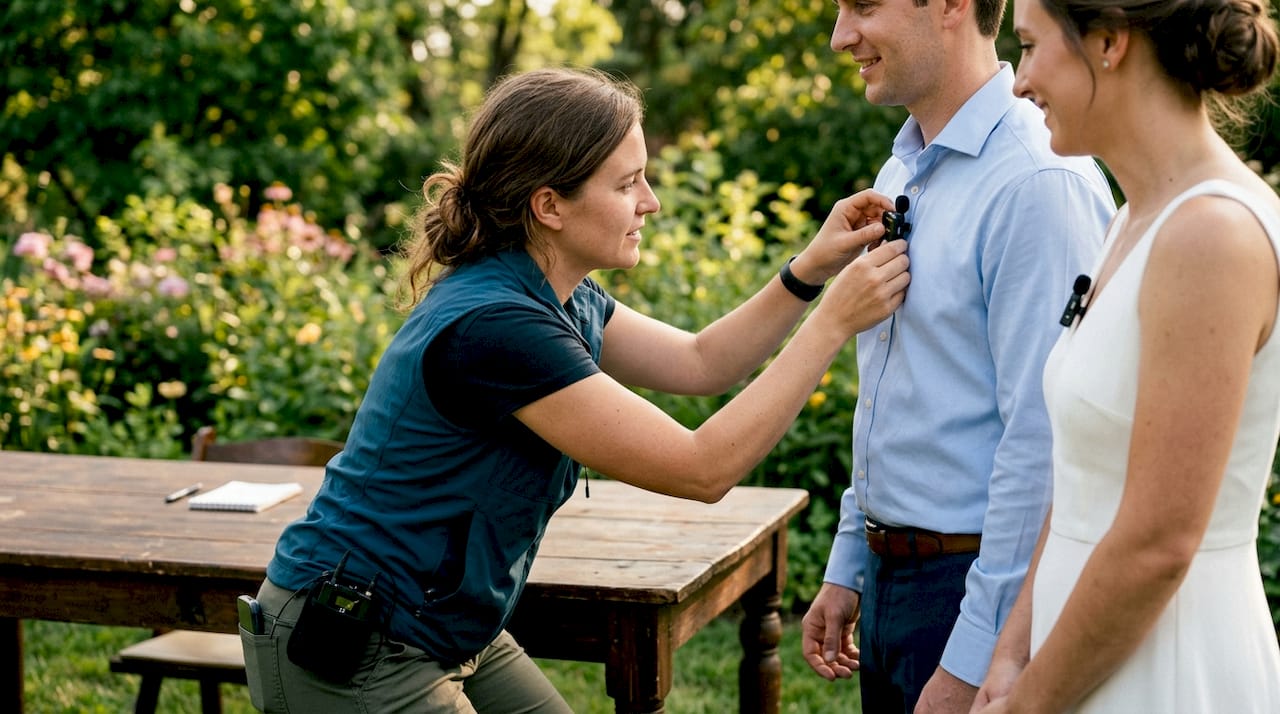
Audio is the emotional backbone of every wedding film. The role of audio in wedding videography is to capture the voices, vows, and ambient sounds that transform raw footage into a memory you will return to for decades. Visuals show what happened. Audio makes you feel it again. Wedding audio is often the most neglected technical aspect of production, yet it holds the key to a timeless film. Pixelgroves treats sound as a first-class element of every wedding story it captures.
How does audio quality affect emotional impact in wedding films?
Audio quality is the single most predictive factor for long-term client satisfaction in wedding videography. That finding is not intuitive. Most couples focus on camera angles, lighting, and editing style when they evaluate a videographer. Sound rarely enters the conversation until something goes wrong.
The neuroscience behind this is clear. Vocal emotions are recognized within 200 milliseconds, roughly 100 milliseconds faster than visual expressions. Your brain processes the sound of your partner’s voice before it fully registers their face on screen. That speed is why a crackly, muffled recording of your vows feels so deeply wrong, even when the image is sharp.
“Films with high-quality audio consistently outperform even high-quality video with poor audio on emotional impact and professional perception. Emotional impact ratings reach 5.7 versus 3.8, and hiring intent shows an 82% difference.”
The rewatching data makes the stakes concrete. Films with excellent audio are rewatched 3.9 times more frequently after three years compared to those with poor audio. A film you never rewatch is a film that fails its purpose. When couples do stop watching their wedding video, bad sound is the most common reason. 41% of negative reviews cite poor audio as their primary complaint, compared to 22% who cite missing visual moments. Poor audio causes nearly twice as much dissatisfaction as missed camera shots.
When audio and visual signals conflict, audio dominates emotional perception in 74% of cases. That means your brain will follow the sound, not the picture, when deciding how a moment felt. A beautifully lit ceremony with muffled vows reads as cold and distant. Clear audio over imperfect footage reads as warm and real.
What equipment and techniques capture the best wedding audio?
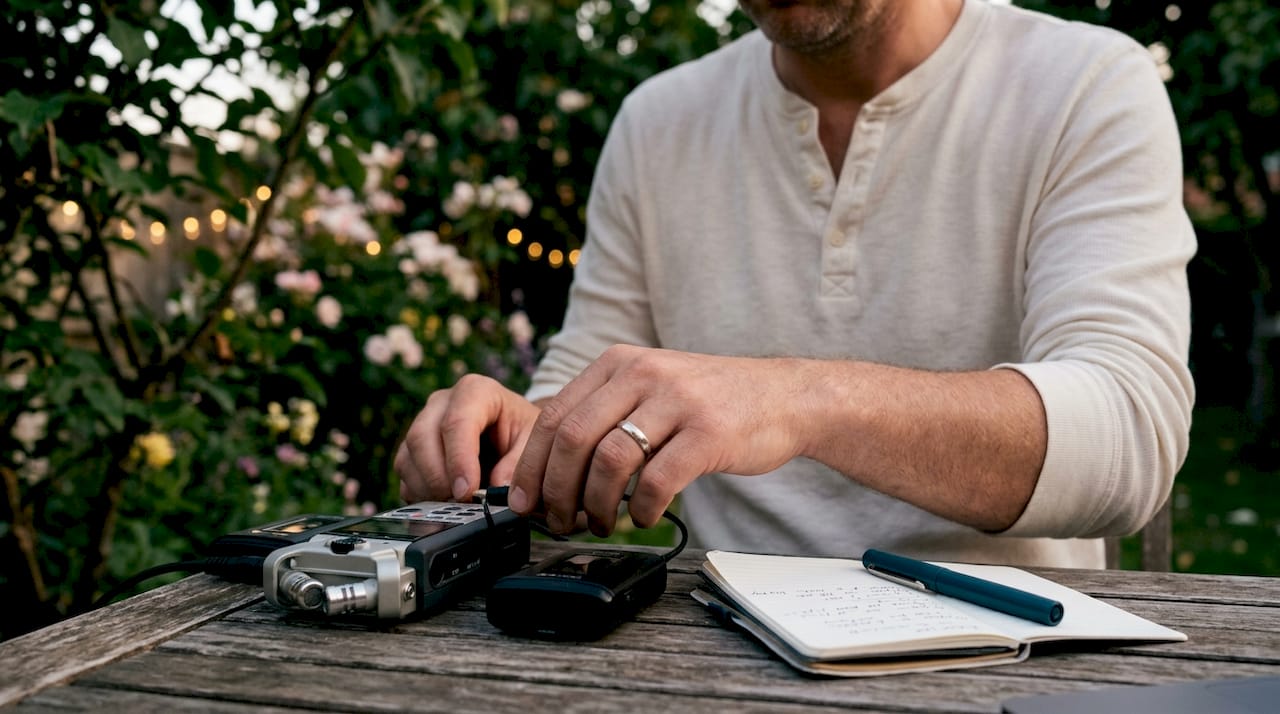
Professional wedding audio capture relies on multiple synchronized sources working together. Camera microphones are a reference track at best. They sit too far from speakers, pick up ambient noise, and cannot isolate voices in a crowded venue. 18% of videographers still rely on camera microphones as their primary source, producing sound that is often unusable for vows.
The three core sources that professional teams use are:
Wireless lavalier microphones. A small clip-on mic placed on the officiant or one partner captures both voices clearly. Dual lavalier systems reach 89% usable vow audio compared to 12% for camera microphones alone. One well-placed lavalier on the officiant usually covers both partners because they stand close together during the ceremony.
Soundboard feed from the venue PA system. The PA system is already calibrated for the room’s acoustics. A direct board feed gives you a clean, consistent audio line that no ambient microphone can match. Many videographers simply do not ask for access to it.
Dedicated audio recorders. A standalone recorder like a Zoom H5 or Tascam DR-40X captures audio independently of the camera, giving editors a separate, high-quality track to work with in post-production.
Pro Tip: Ask your videographer whether they record in 32-bit float WAV format. This format captures such a wide dynamic range that editors can recover audio that was recorded too quietly or that clipped above 0 dB. It acts as an insurance policy for your vows.
32-bit float WAV recording allows editors to rescue speech that was too quiet at minus 25 dB or overloaded above 0 dB during capture. Without it, distorted audio is permanent. With it, a skilled editor can often restore a moment that would otherwise be lost.
The table below shows how each audio source compares in typical wedding conditions.
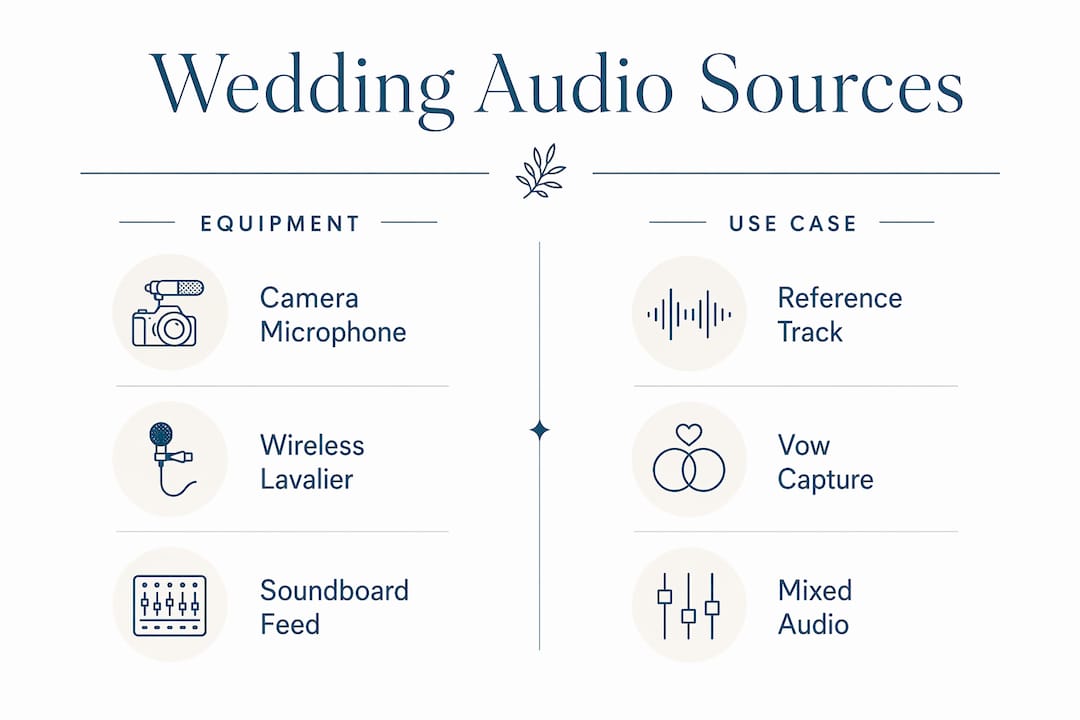
Audio source | Best use case | Main limitation |
Camera microphone | Reference track only | Too distant, picks up ambient noise |
Wireless lavalier | Vows, speeches, officiant | Requires placement and monitoring |
Soundboard feed | Ceremony, reception speeches | Requires DJ or AV coordinator access |
Dedicated audio recorder | Full ceremony backup | Needs syncing in post-production |
Successful wedding audio recordings rely on all these sources working together, giving editors the flexibility to choose the cleanest track for each moment.
What misconceptions do couples have about wedding audio?
The biggest misconception is that amplification means volume. Sound professionals emphasize that the goal is intelligibility for every guest, not loudness. The guest in the back row should hear every word of your vows as clearly as your maid of honor standing three feet away. That requires careful calibration, not just turning up the speakers.
A second common myth is that you need a microphone on both partners to capture the vows. A single discreet lavalier on the officiant or one partner often captures both voices clearly because of how close couples stand during the ceremony. Bulky visible microphones on both partners are unnecessary and can distract from the visual story.
Venue acoustics create challenges that couples rarely anticipate. Stone churches and cathedral spaces have long reverberation times. Even top-quality lavaliers struggle in these environments because the reflected sound blurs the direct signal. In those venues, a board feed and active sound management become critical, not optional.
Pro Tip: If your ceremony is in a stone or cathedral venue, ask your videographer and your sound coordinator to do a walkthrough together before the wedding day. Testing mic placement and board feed access in the actual space prevents surprises.
The coordination gap between the DJ or AV team and the videography team causes more audio failures than any equipment problem. If the videographer does not arrange board feed access before the event, that opportunity is gone. Without proper amplification and coordination, elderly or hard-of-hearing guests miss key moments, and the film loses the emotional clarity that makes it worth rewatching.
How can couples make sure their wedding film has great audio?
You have more influence over your wedding film’s audio quality than you probably realize. The decisions you make during the planning phase directly shape what your videographer can capture on the day.
Ask about audio during your videographer search. Request specific answers about their recording setup. Do they use wireless lavaliers? Do they record a soundboard feed? Do they use dedicated audio recorders? A videographer who cannot answer these questions clearly is not prioritizing sound. Check their equipment approach before you sign a contract.
Confirm board feed access with your DJ or AV coordinator. Your videographer needs to arrange this before the event, not on the morning of your wedding. Ask your planner to add this coordination step to the vendor communication checklist.
Request real-time audio monitoring. A dedicated technician who adjusts levels live during the ceremony prevents wind noise, feedback, and volume drops from ruining your recording. Ask whether your videography team monitors audio actively or simply presses record and hopes for the best.
Schedule a vendor coordination call. Bring your videographer, DJ, and wedding planner together at least two weeks before the wedding. Confirm who handles the board feed connection, where lavaliers will be placed, and who monitors levels during the ceremony.
Do a venue walkthrough. If your venue has unusual acoustics, a pre-event walkthrough lets your audio team test placements and identify problems before they become permanent losses. This step matters most for outdoor ceremonies, stone churches, and large ballrooms.
The couples who end up with the most emotionally powerful films are the ones who treat audio as a planning priority, not an afterthought. Hiring videographers with proven sound production expertise is the single most effective step you can take. The visual storytelling in your film also benefits when sound and image are captured with equal care, much like how visual storytelling shapes the emotional resonance of any personal narrative.
Key Takeaways
Audio quality determines whether couples treasure or forget their wedding film over time. The most effective approach to wedding audio combines wireless lavaliers, soundboard feeds, dedicated recorders, and real-time monitoring.
Point | Details |
Audio drives satisfaction | 41% of negative reviews cite poor audio, nearly double the rate for missing visual moments. |
Rewatching depends on sound | Films with excellent audio are rewatched 3.9 times more often after three years. |
Multiple sources are required | Lavaliers, board feeds, and dedicated recorders together give editors the best material. |
32-bit float protects vows | This recording format rescues audio that was too quiet or distorted during capture. |
Couples must ask the right questions | Confirming board feed access and real-time monitoring before the wedding prevents audio failures. |
Why audio is the part of your wedding film you cannot afford to get wrong
I have watched couples cry watching their wedding films, and I have watched them wince. The difference almost always comes down to sound. When the audio is clear, you hear your partner’s voice crack slightly on the last word of their vows. That crack is the whole film. When the audio is muddy or distant, that moment disappears, and what is left is a pretty slideshow with music.
The couples who regret their wedding films rarely complain about the camera angles. They say things like, “We can barely hear what we said to each other.” That regret is permanent. You cannot go back and re-record your vows.
What surprises me most is how often couples discover this too late. They spend months choosing a photographer, a florist, a caterer, and a dress. They spend thirty minutes choosing a videographer and never ask a single question about audio. The assumption is that if the video looks good, it will be good. That assumption is wrong, and the data backs that up.
My honest advice is this: treat audio as a non-negotiable requirement, not a bonus feature. When you interview videographers, ask them to walk you through their audio setup the same way you would ask a caterer about their menu. If they cannot explain their lavalier placement, their board feed process, and their recording format, keep looking. Your wedding film is the one artifact from that day that will outlast everything else. Make sure you can actually hear it.
— Kellie
How Pixelgroves captures audio that makes your film worth rewatching
Pixelgroves builds every wedding film around sound as much as image. The team uses wireless lavalier microphones, direct soundboard feeds, and dedicated audio recorders on every shoot, with real-time monitoring throughout the ceremony. That redundancy means no single point of failure can cost you your vows.
[
Every Pixelgroves package includes full audio production coordination with your DJ or AV team before the wedding day. The result is a film where you can hear every word, every laugh, and every quiet moment between you and your partner. See the full range of photography and videography packages and find the option that fits your wedding. You can also explore Pixelgroves’ wedding photography styles to see how visual and audio storytelling come together in a complete wedding film.
FAQ
Why does audio matter more than video quality in wedding films?
Audio dominates emotional perception in 74% of audio-visual conflicts, and vocal emotions register in the brain 100 milliseconds faster than visual expressions. Clear sound of your vows creates a stronger emotional memory than sharp visuals with muffled audio.
What microphone setup is best for capturing wedding vows?
A wireless lavalier on the officiant or one partner captures both voices clearly in most ceremonies. Dual lavalier systems reach 89% usable vow audio compared to 12% for camera microphones alone.
What is 32-bit float recording and why does it matter?
32-bit float WAV format captures a dynamic range wide enough for editors to recover audio that was recorded too quietly or that distorted above 0 dB. It protects your vows from permanent audio loss caused by unexpected volume changes.
How do I know if my videographer handles audio well?
Ask whether they use wireless lavaliers, record a soundboard feed, and monitor audio in real time during the ceremony. A videographer who cannot answer those questions specifically is not treating sound as a priority.
Can a stone church or outdoor venue ruin my wedding audio?
Stone and cathedral venues create long reverberation times that blur direct sound. Outdoor ceremonies face wind noise and distance challenges. In both cases, a board feed and active monitoring become critical. Ask your videographer and sound coordinator to do a venue walkthrough together before the wedding day.
Recommended
Comments