The Role of Videographer Alongside Photographer at Weddings
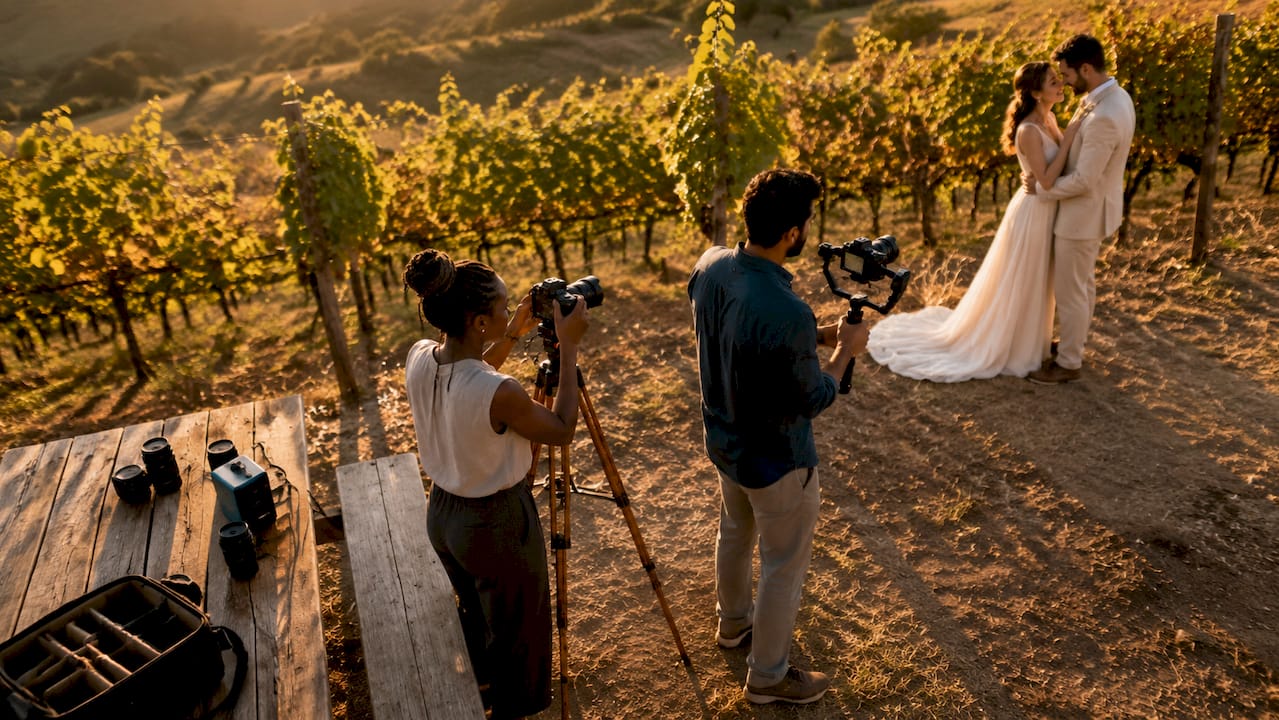
The role of videographer alongside photographer is defined by complementary coverage: one captures timeless stills while the other records motion, sound, and emotion in real time. Photographers focus on still images while videographers capture motion and emotional storytelling with sound, and these two outputs together create a multi-dimensional record no single vendor can produce alone. Most couples who skip video regret it within a year. The two roles are not redundant. They are two halves of the same story.
What are the roles and responsibilities of wedding videographers vs. photographers?
Wedding photographers and videographers share the same venue and the same timeline, but their technical focus and creative output are fundamentally different. Understanding those differences helps you make smarter hiring decisions and set realistic expectations for your wedding day.
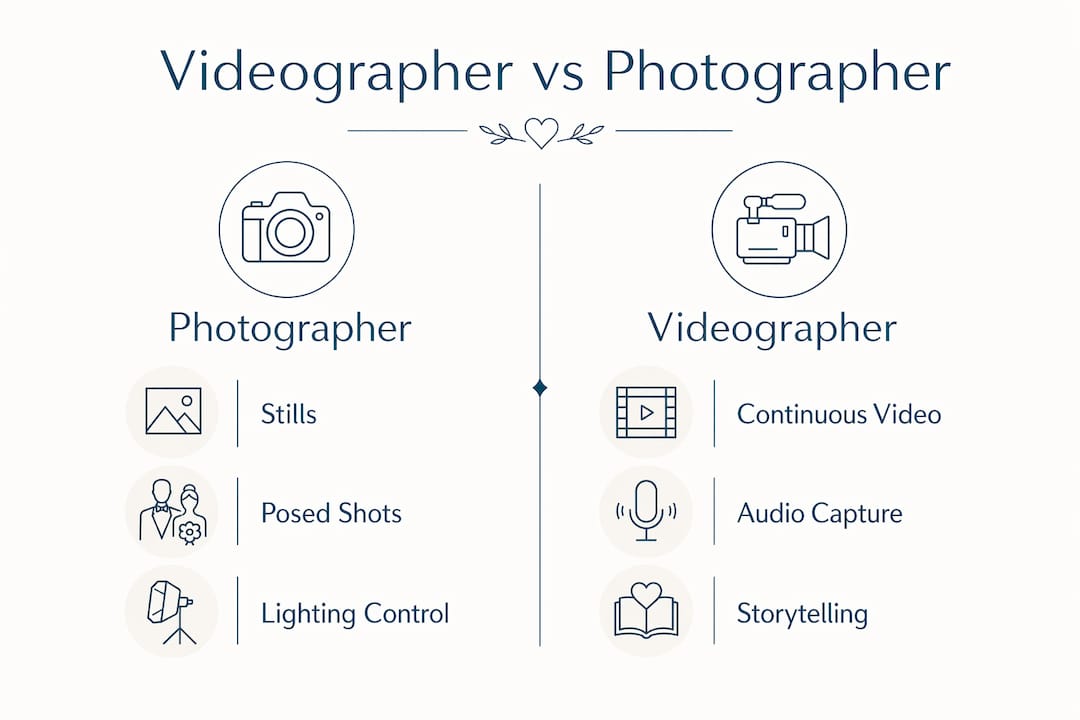
Photographers prioritize still, posed images. They control eye lines, manage light, and direct couples into positions that translate beautifully into a single frozen frame. Every click of the shutter is a deliberate decision about composition and timing. The result is a gallery of images you can print, frame, and pass down for generations.
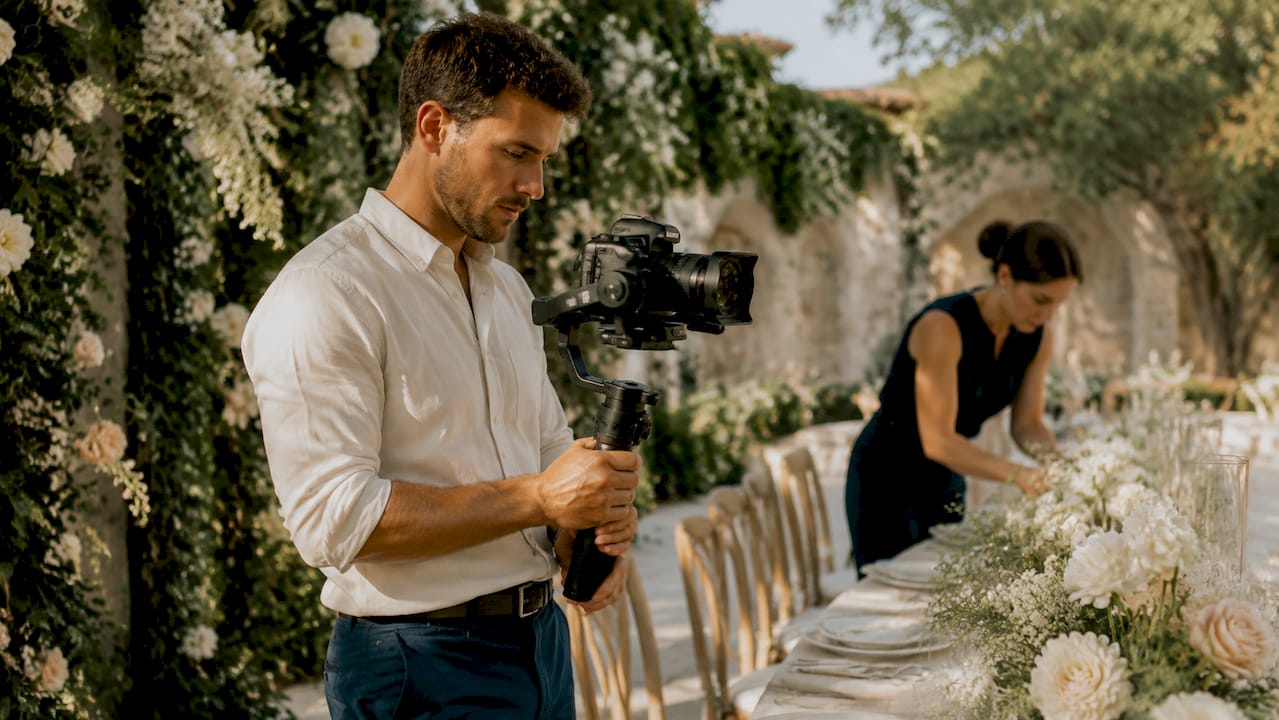
Videographers operate in a completely different mode. Their job is continuous. They manage moving images, capture audio and motion simultaneously, and build a sequence of moments that replay with sound and feeling. A videographer carries stabilizers, external microphones, and sometimes secondary cameras to cover multiple angles at once. That technical complexity is why the videographer role in photo shoots and events requires a separate specialist, not a photographer with a video mode turned on.
Here is a clear breakdown of each role’s primary responsibilities:
Photographer responsibilities:
Direct posed portraits and group shots
Manage ambient and artificial lighting for stills
Capture candid moments between formal sessions
Deliver a curated gallery of edited still images
Videographer responsibilities:
Record continuous footage across ceremony, reception, and transitions
Capture clean audio from vows, speeches, and ambient sound
Operate stabilizers, sliders, and secondary rigs for cinematic motion
Edit footage into a narrative film with music and sound design
Pro Tip: Ask your videographer specifically how they handle audio during the ceremony. A dedicated lapel microphone on the officiant or groom captures vows clearly, and that audio becomes the emotional backbone of your wedding film.
One more distinction worth knowing: social media content creators represent a third, separate role. They shoot vertical video and quick clips for Instagram Reels or TikTok. Lumping this role in with your videographer is a common mistake that leads to unmet expectations on both sides.
How do videographers and photographers coordinate during key wedding moments?
Many couples assume their photo and video teams will naturally figure out how to work together on the day. Without explicit communication, competing priorities between photographers and videographers cause tension and disrupt the flow, affecting final documentation. The good news is that coordination is straightforward when both teams follow a shared structure.
Here is how a well-coordinated photo and video team moves through a wedding day:
Pre-wedding alignment (4 to 6 weeks out). Share identical planning documents like your timeline and shot lists with both teams well before the wedding. This prevents scheduling conflicts and gives each vendor time to plan their gear and positioning.
Morning-of check-in. Both teams should connect briefly at the start of the day to confirm the timeline, flag any changes, and agree on positioning for key moments. A five-minute conversation prevents an hour of friction.
Portrait sessions. Photographers lead posing while videographers capture motion and alternate angles. The videographer steps back during directed poses and moves in to capture the in-between moments: the laughter, the adjustments, the genuine reactions.
Ceremony coverage. Videographers lead camera placement and audio during vows and speeches. This is the moment where sound quality matters most. The photographer works around the videographer’s fixed camera positions rather than the reverse.
Reception and speeches. Both teams coordinate on positioning so neither blocks the other’s sightline. A quick conversation before the first dance about who covers which angle eliminates the most common source of day-of tension.
End-of-night wrap. Teams confirm they have captured all must-have moments and flag anything that may need a quick reshoot while guests are still present.
Pro Tip: Encourage your photographer and videographer to exchange phone numbers and connect directly before the wedding. Even a brief text thread between vendors removes the couple as the communication middleman on the day itself.
Key moments like vows and speeches require special coordination on camera placement and audio to avoid obstructing views and maximize emotion. Treating these moments as shared responsibilities, rather than competing ones, is what separates a smooth wedding day from a stressful one.
What style differences should couples watch for when hiring both vendors?
Style compatibility matters as much as technical skill. Mismatched approaches create logistical challenges and reduce the couple’s comfort on the day. This is one of the least-discussed risks in wedding planning, and it catches couples off guard more often than budget overruns.
Consider a common mismatch: an editorial photographer who spends 45 minutes directing highly posed portraits paired with a documentary-style videographer who thrives on organic, unscripted moments. Some photographers rely heavily on directing poses while documentary videographers prefer candid moments, and this difference creates tension that impacts both teams’ work unless styles are reconciled before the day. The couple ends up feeling pulled in two directions, and the final products reflect that discomfort.
Questions to ask both vendors before booking:
How do you typically work alongside the other vendor during portrait time?
Have you worked with this specific photographer or videographer before?
What happens if the timeline runs short and portrait time gets cut?
How do you handle moments when your creative approach conflicts with the other team’s?
The most effective solution is hiring vendors who have an established working relationship. Teams that have shot together before have already resolved the friction points. They know each other’s shooting styles, they communicate in shorthand, and they move around each other without disrupting the couple’s experience. If you are hiring independent vendors who have never met, introduction and style compatibility conversations before the wedding reduce workflow tension and align creative approaches significantly.
What practical steps help photo and video teams collaborate effectively?
You do not need to manage your vendors like a project manager. You do need to give them the structure to succeed. These steps make the biggest difference in how smoothly your photo and video teams work together.
Send unified planning documents 4 to 6 weeks before the wedding. Both teams receive the same timeline, venue layout, shot list, and contact sheet. This single action eliminates the majority of day-of miscommunications. Vendor coordination involving all key vendors leads to a calmer day and enhances the quality of both photo and video coverage.
Assign one point of contact for vendor communication. Your wedding planner, a trusted family member, or a day-of coordinator should field timeline questions and relay updates. This keeps both teams informed without pulling you away from your own wedding.
Allocate enough time for portraits. Rushed portrait sessions produce stiff photos and choppy video. Build in buffer time so both teams can capture the same moments from their respective angles without competing for seconds.
Clarify your expectations for posed versus candid coverage. Tell both vendors upfront how much of the day you want directed versus documentary. This single conversation aligns their approach before they ever arrive on site.
Encourage a pre-wedding introduction. A phone call or brief meeting between your photographer and videographer before the day costs nothing and pays off significantly in day-of chemistry.
Pro Tip: When you review your vendors’ portfolios, look specifically for examples where both photo and video were captured at the same event. Vendors who regularly collaborate with the other discipline understand the workflow intuitively, and that experience shows in the final product.
You can also explore how to choose a videography team that already prioritizes collaboration as part of their process, which removes much of this coordination burden from your plate entirely.
Comparing hiring models for wedding photo and video coverage
Different hiring models have varying strengths and risks for coordination and coverage quality. Choosing the right model depends on your priorities and how much coordination you want to manage yourself.
Hiring model | Strengths | Risks |
Independent vendors (no prior relationship) | Maximum creative choice; can select best-in-class for each role | Requires active coordination; style mismatches are common |
One studio with separate photo and video teams | Established internal workflows; unified communication | Less creative diversity; quality can vary between team members |
Partner vendors with regular collaboration | Proven chemistry; smooth day-of workflow; aligned creative styles | Fewer options; may require booking both or neither |
Solo hybrid shooter (photo and video) | Lower cost; single point of contact | Limited simultaneous coverage; quality trade-offs in both outputs |
The partner vendor model produces the most consistent results for couples who prioritize a cohesive final product. The best wedding creatives emphasize a teamwork mindset, where videographers and photographers see themselves as partners capturing a shared love story. That mindset is far easier to find in teams that already have a working relationship than in two strangers meeting for the first time at your ceremony.
The solo hybrid model carries the most risk. One person cannot simultaneously nail a posed portrait and capture clean audio from two angles. If budget is the primary driver, a strong photographer paired with a focused video highlight package from a specialist is a better trade-off than one person attempting both.
Key takeaways
Videographer and photographer collaboration works best when both teams share planning documents, define lead roles for each moment, and align on creative style before the wedding day.
Point | Details |
Distinct but complementary roles | Photographers capture stills; videographers capture motion and audio. Both are needed for complete coverage. |
Pre-wedding coordination is non-negotiable | Share timelines and shot lists with both teams 4 to 6 weeks before the wedding to prevent day-of conflicts. |
Style compatibility affects the couple’s experience | Mismatched creative approaches create tension that shows up in the final photos and film. |
Lead roles reduce conflict | Photographers lead portrait sessions; videographers lead audio and camera placement during vows. |
Hiring model shapes coordination complexity | Partner vendors with established relationships deliver the most consistent, conflict-free coverage. |
Why collaboration is the real product you are buying
I have watched couples spend months agonizing over floral arrangements and five minutes selecting their video team. The flowers are gone by Sunday night. The film lasts forever.
What most couples do not realize until after the wedding is that the relationship between their photographer and videographer shapes the entire emotional tone of the day. When those two professionals trust each other, they move quietly and confidently. They do not interrupt moments to reposition. They do not compete for the same angle. The couple feels that calm, and it shows in every frame.
Successful partnerships are built on collaboration, mutual respect, and clear communication, and the result is relaxed couples and better outcomes across both photo and video. I have seen the opposite too. When a photographer and videographer are working against each other, even subtly, the couple picks up on the tension. Shoulders tighten. Smiles become performative. The authenticity that makes a wedding film genuinely moving disappears.
My honest advice: treat vendor compatibility as a hiring criterion, not an afterthought. Ask your photographer who they enjoy working with. Ask your videographer the same question. If they name each other, you have found your team. If they hesitate, keep asking. The photojournalism approach that produces the most authentic wedding images and films comes from professionals who know when to direct and when to disappear. That skill is built through collaboration, not individual talent alone.
— Kellie
How Pixelgroves coordinates photo and video for your wedding day
[
Pixelgroves builds videographer and photographer collaboration into every wedding package from the start. The team shares unified planning documents with all vendors weeks before the wedding, conducts pre-event coordination calls, and arrives on the day with defined lead roles for every key moment. The result is coverage that feels calm, natural, and complete. Pixelgroves earned the 2025 Best of Florida Wedding Photographer Award by treating every wedding as a shared storytelling project, not a competition between two vendors. Explore the wedding photography styles and pricing and packages to see how coordinated coverage is built into every option.
FAQ
What is the main role of a videographer alongside a photographer?
The videographer captures motion, continuous audio, and emotional storytelling while the photographer focuses on still, posed images. Together they produce a complete, multi-dimensional record of the wedding day.
How should couples coordinate their photographer and videographer together?
Send both vendors the same timeline and shot list 4 to 6 weeks before the wedding, assign a single point of contact for day-of communication, and encourage the two vendors to connect directly before the event.
What happens when a photographer and videographer have incompatible styles?
Mismatched styles create tension on the day, lead to multiple retakes, and reduce the couple’s comfort in front of the camera. Style compatibility conversations before booking prevent this outcome.
Is a solo hybrid shooter a good alternative to separate vendors?
A solo hybrid shooter reduces cost and simplifies communication, but one person cannot simultaneously capture high-quality stills and clean multi-angle video. For couples who prioritize both outputs, separate specialists deliver stronger results.
When does the videographer take the lead over the photographer?
During vows and speeches, the videographer leads camera placement and audio setup. The photographer works around the videographer’s fixed positions to avoid obstructing the sound capture that anchors the wedding film.
Recommended
Comments