Wedding Videography for Couples Explained
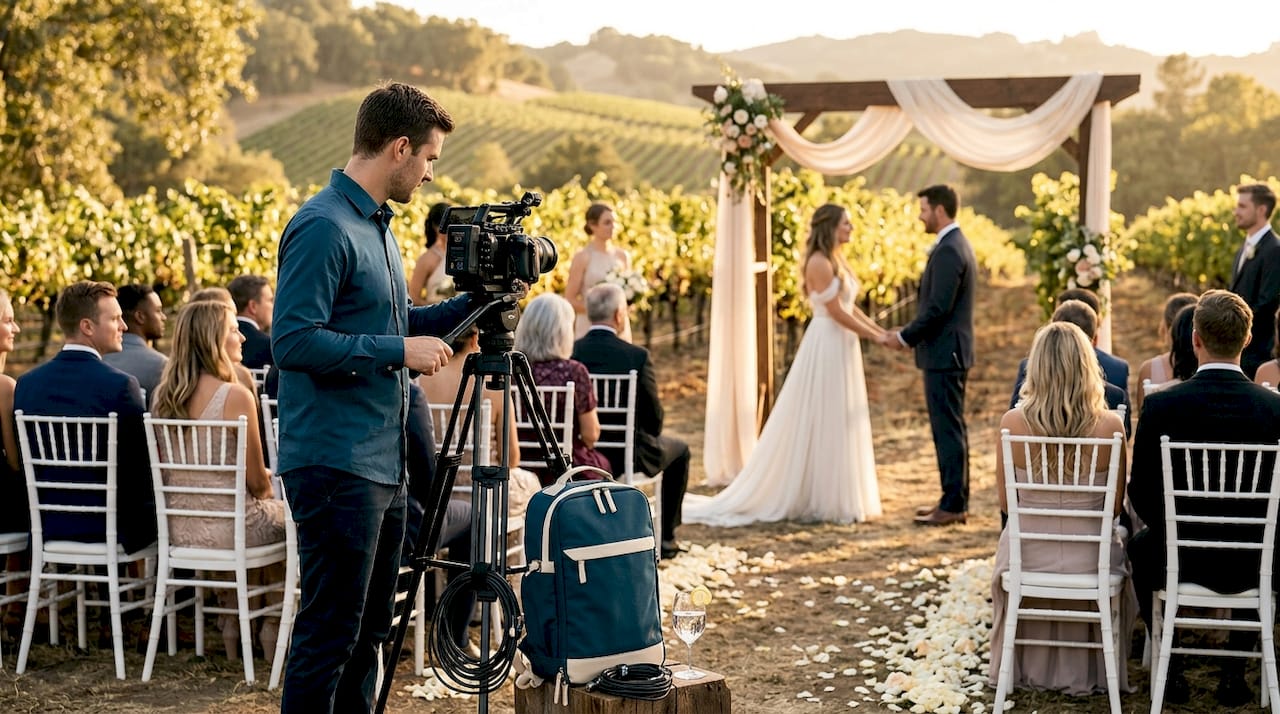
Most couples spend months planning every detail of their wedding day, then realize they have no idea what wedding videography actually involves. The phrase “what is wedding videography explained” generates thousands of searches every month, which tells you that confusion about this service is genuinely common. Wedding videography is not a phone propped against a flower arrangement. It is a cinematic, story-driven craft that captures the sounds, movements, and emotions your photographs simply cannot hold. This guide breaks down what the service includes, how it works, which styles exist, and why it matters more than most couples expect.
Table of Contents
Key takeaways
Point | Details |
More than recording | Wedding videography is storytelling through film, not simple event documentation. |
Multiple deliverables | You typically receive a short teaser reel, a highlights film, and sometimes a feature-length edit. |
Post-production is intensive | Editing a highlight film can take 40 to 60 hours before you receive the final cut. |
Style choice matters | Cinematic, documentary, and editorial styles produce very different emotional experiences. |
Regret is real | Skipping a videographer is one of the most common regrets couples report after their wedding. |
What is wedding videography and what does it include
Wedding videography, at its core, is the professional filming and editing of your wedding day into a polished, narrative film. It is distinct from event videography in a critical way. Event videography documents what happened. Wedding videography tells the story of why it mattered.
A professional wedding video package typically covers several key events across your day.
The getting-ready moments and quiet, anticipatory scenes before the ceremony
The ceremony itself, including the processional, vows, ring exchange, and recessional
Cocktail hour candid interactions and guest reactions
Reception events including first dance, parent dances, toasts, and speeches
Unscripted moments throughout the day that no one planned
Those events get captured, but what you actually receive as a deliverable is a different conversation. Most packages include at least three distinct outputs. The teaser reel runs one to two minutes and is usually delivered within a few weeks. The highlights film typically runs five to eight minutes and focuses on emotional peaks and key scenes. Feature-length or documentary edits can run twelve to fifteen minutes or longer and include more complete coverage of the full day.
One thing that surprises many couples is the gap between raw footage and the finished product. Raw footage is unedited and lacks music, color correction, and audio synchronization. It is effectively an archive, not a watchable film. Professional post-production transforms that material into something emotionally resonant.
Pro Tip: Ask your videographer upfront whether raw footage is included in your package. Some studios charge extra for it, and others do not offer it at all. Knowing this before signing saves confusion later.
Popular styles of wedding videography
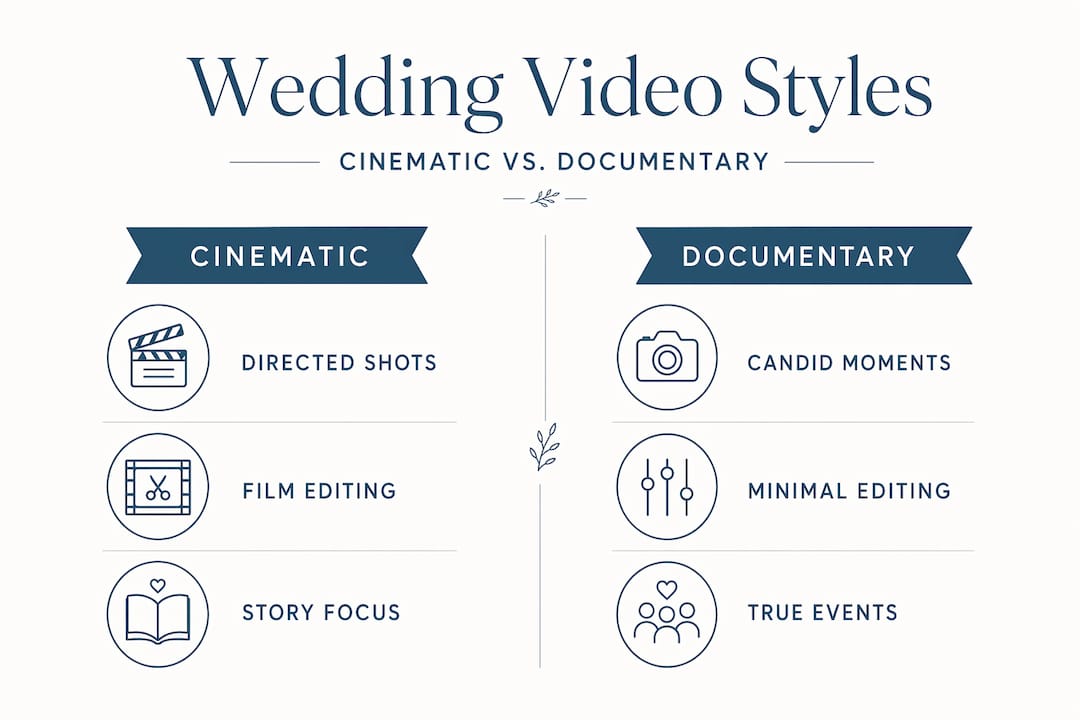
Choosing a videography style is one of the most personal decisions you will make in this process. Wedding videography styles include cinematic, documentary, editorial, and vintage, each producing a distinctly different emotional experience.
Style | Filming approach | Editing feel | Best for |
Cinematic | Directed shots, dramatic angles | Story-driven, film-like | Couples who want a movie experience |
Documentary | Natural, observational, minimal direction | Chronological, authentic | Couples who value raw emotion and realism |
Editorial | Fashion-influenced, stylized framing | High-energy, magazine-like | Style-forward couples with visual aesthetics |
Vintage | Warm tones, soft textures, film grain | Nostalgic, romantic | Couples drawn to timeless, classic visuals |
The cinematic style is currently the most popular. It uses techniques borrowed from narrative filmmaking, including deliberate camera movement, layered audio, and non-linear editing. The result feels less like documentation and more like a short film where you and your partner are the main characters.
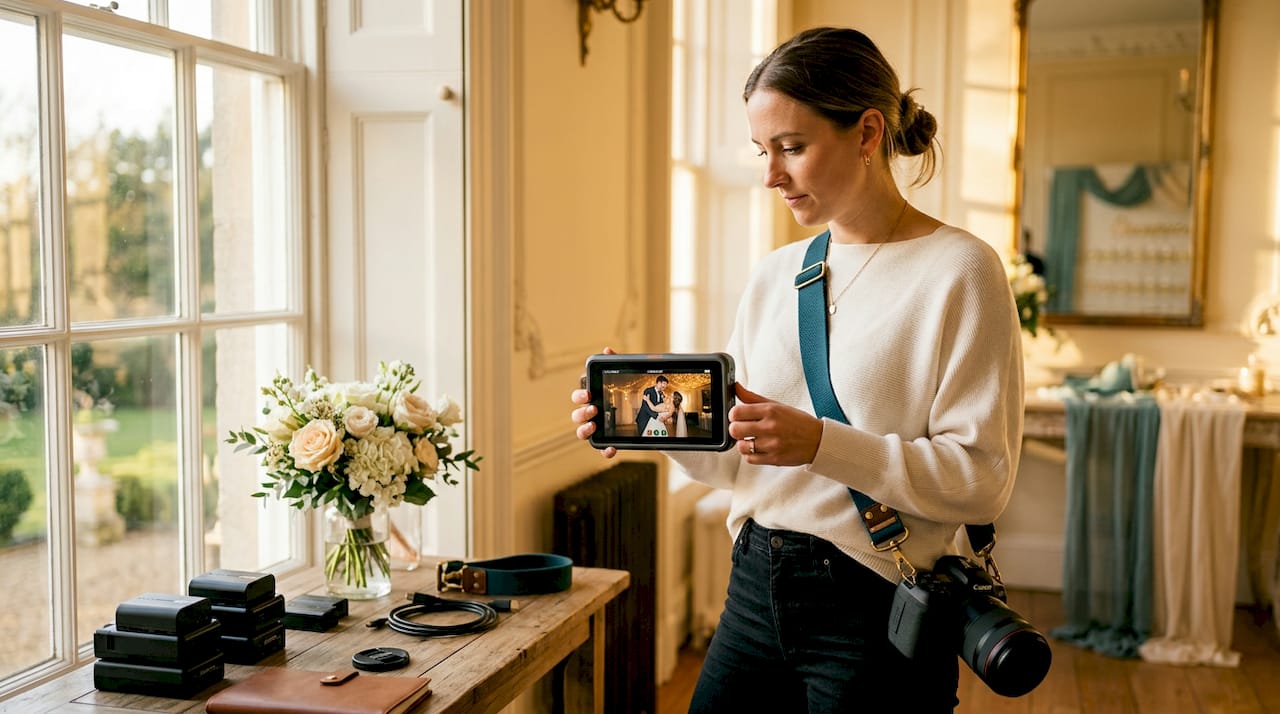
The documentary approach is the opposite in philosophy. The videographer stays mostly out of your way, capturing what unfolds naturally. Some couples find this more emotionally honest than a heavily directed film. Others wish it had more visual drama.
A notable 2026 trend worth knowing is that short-form social media ready wedding films are now a standard request. Many couples want a one-minute vertical edit specifically formatted for Instagram or TikTok alongside their traditional deliverables. If this matters to you, confirm the videographer offers it before signing.
You can also explore how photography and videography styles complement each other when planning a cohesive visual story for your day.
How wedding videography works
Understanding the full process from consultation to delivery removes a lot of the uncertainty couples feel when booking this service.
Initial consultation. Your videographer learns your timeline, venue, priorities, and personal story. This conversation directly shapes how they approach your day.
Pre-wedding planning. Good videographers visit the venue, review the schedule with your coordinator, and confirm key moments like vow readings, speeches, and any cultural traditions.
Equipment preparation. Professional setups include multiple cameras, specialized lenses, and lighting solutions designed for low-light environments like candlelit receptions and churches.
Day-of filming. Coverage typically runs eight to twelve hours depending on your package. The team films simultaneously across locations to avoid missing anything.
Audio capture. This step is genuinely where amateurs and professionals diverge most visibly. Audio recording on location requires lavalier microphones on key speakers and direct board feeds for speeches and music. Poor audio cannot be fixed in post-production.
Post-production editing. The editor sorts through hours of footage, selects the strongest material, color grades every scene, synchronizes audio, and builds an emotional arc with music.
Delivery. You receive your final films digitally, often through a private online gallery link.
The timeline between your wedding day and receiving the final film is longer than most couples expect. Industry turnaround time ranges from 12 to 52 weeks for the final film, though teasers often arrive within days or weeks. That range exists because editing a five-to-seven-minute highlight alone typically takes 40 to 60 hours of skilled work.
For a closer look at what professional gear makes this possible, the videography equipment guide at Pixelgroves walks through exactly what goes into a production-quality setup.
Pro Tip: Build your wedding timeline with your videographer before finalizing it with your venue or coordinator. Fifteen extra minutes between the ceremony and reception can mean the difference between a rushed shoot and genuinely beautiful footage.
Why wedding videography matters
Photographs do extraordinary work. But they cannot give you the sound of your partner’s voice as they read their vows, the laughter that erupted during a toast, or the way your grandmother watched you walk down the aisle. Videography captures sounds, voices, and movement in ways photographs structurally cannot, creating a different kind of memory.
“Not hiring a professional videographer is among the most common regrets couples report after their wedding.” — Brides of North Texas
The specific benefits that couples consistently point to include these.
Vows and speeches. These are the most emotionally dense moments of the day. Hearing them again, months or years later, carries weight that a written transcript never can.
Candid moments. The best wedding films are built around unscripted interactions. A flower girl falling asleep under a table, two old friends reuniting on the dance floor, your parent’s expression as you enter the room.
Sharing with people who could not attend. A polished film gives distant family and friends a way to genuinely experience the day, not just see photos of it.
A heirloom that deepens over time. The emotional power of wedding footage typically increases across years, especially after having children or losing loved ones who appear in the film.
Professional wedding filming requires significant skill, specialized equipment, and intensive post-production labor. What you are paying for is not hours filmed. It is the ability to re-experience a day that passed far too quickly.
How to choose your wedding videographer
Selecting the right professional comes down to three things: their style matches your vision, their process sets clear expectations, and you trust them as a person who will be with you through one of the most personal days of your life.
Start with their portfolio. Watch at least three full highlight films, not just short clips from their website. You want to see how they handle a full story arc and whether their work makes you feel something. Check reviews specifically for comments about communication, reliability, and final delivery quality.
Questions worth asking before you sign any contract include these.
How many hours of coverage are included, and what does overtime cost?
Do you use a second camera operator, and what equipment do you shoot with?
What is your backup plan if your primary equipment fails on the day?
How do you handle audio at outdoor ceremonies or loud receptions?
What is your actual average delivery time based on recent clients?
Budget conversations are more honest when you understand what drives cost. Editing time is the largest single expense in most packages, which is why studios offering unusually fast delivery at low prices are worth scrutinizing carefully.
Pro Tip: If you are also hiring a photographer, ask whether booking both services with the same studio creates a pricing advantage. Combined packages often cost less than separate bookings, and having a unified creative team on the day produces more cohesive results.
My take on why this investment pays off
I’ve spoken with hundreds of couples over the years, and the pattern is remarkably consistent. The couples who wrestled most with the decision to hire a videographer are often the ones who are most grateful afterward. The couples who skipped it because of budget pressure are the ones who bring it up, unprompted, as a regret.
What I find genuinely underappreciated is that wedding video footage becomes more valuable with time, not less. In the months right after your wedding, you are still riding the emotional memory of the day itself. Five years later, when the sharp edges of that memory have softened, a well-made film does something extraordinary. It hands the day back to you, intact.
I also think couples underestimate how much of the day they actually miss while it is happening. You are present, yes. But you are also managing nerves, talking to guests, and moving through a choreographed schedule. Your videographer is the only person whose sole job is to watch everything you cannot see at the time. That perspective has genuine, irreplaceable value.
My honest advice is this: if you are working within a tight budget, scale back the floral arrangements before you scale back the videography. Flowers last a weekend. A great wedding film lasts a lifetime.
— Kellie
Capture your story with Pixelgroves
[
Pixelgroves brings together award-winning storytelling and technical precision to create wedding films that couples genuinely treasure for decades. The team behind Pixelgroves has earned recognition including the 2025 Best of Florida Wedding Photographer Award, and they specialize in finding the emotional moments that define your unique love story, not just the scheduled ones.
Whether you are drawn to cinematic storytelling, natural documentary coverage, or a stylized editorial look, Pixelgroves tailors every film to reflect who you actually are as a couple. You can browse real wedding films in the Pixelgroves portfolio to see the quality and range of styles firsthand. When you are ready to talk about your day, reviewing the pricing and packages is a strong first step, along with exploring how the process works from the initial consultation all the way through delivery.
FAQ
What does wedding videography include?
Wedding videography typically includes filming of the ceremony, reception, key moments like vows and first dance, and candid interactions throughout the day. Most packages deliver a short teaser reel, a highlights film, and sometimes a full-length documentary edit.
How long does it take to receive a wedding video?
Turnaround time ranges from 12 to 52 weeks for the final film, depending on the studio and package. Teaser reels are usually delivered much sooner, often within a few weeks of the wedding.
What are the main styles of wedding videography?
The primary styles are cinematic, documentary, editorial, and vintage. Cinematic films are story-driven and film-like, while documentary coverage captures moments naturally without heavy direction.
Is wedding videography worth the cost?
Skipping a professional videographer is among the top regrets couples report. Video captures voices, movement, and candid moments that photographs cannot, and the emotional value of that footage typically grows stronger over time.
How is professional wedding videography different from a casual recording?
Professional wedding filming uses multiple cameras, specialized audio equipment, and extensive post-production editing. A casual recording captures what happened. A professional film turns it into a story you will want to watch again and again.
Recommended
Comments