Wedding Video Delivery Timeline: What Couples Should Expect

Most couples walk away from their wedding day wondering the same thing: when will the video actually be ready? The short answer is 8–12 weeks for a highlight film, though the full picture depends on what you ordered and when your wedding falls in the calendar year. A wedding video delivery timeline describes the complete schedule from your wedding day to the moment you receive your finished films, and understanding it upfront saves a lot of anxious inbox-checking.
Here’s a quick look at what to expect across the main deliverables:
Sneak peek or teaser (30–60 seconds): 1–2 weeks after the wedding
Highlight film (4–8 minutes): 8–12 weeks, the primary deliverable most couples share
Full ceremony edit: 8–14 weeks
Documentary-style film: 10–16 weeks or longer
Delivery format: branded online gallery, digital download, or USB drive
The highlight film is the centerpiece of your package. At 4–8 minutes, it’s the version you’ll text to your parents, post on Instagram, and rewatch on your anniversary. Everything else builds around it.
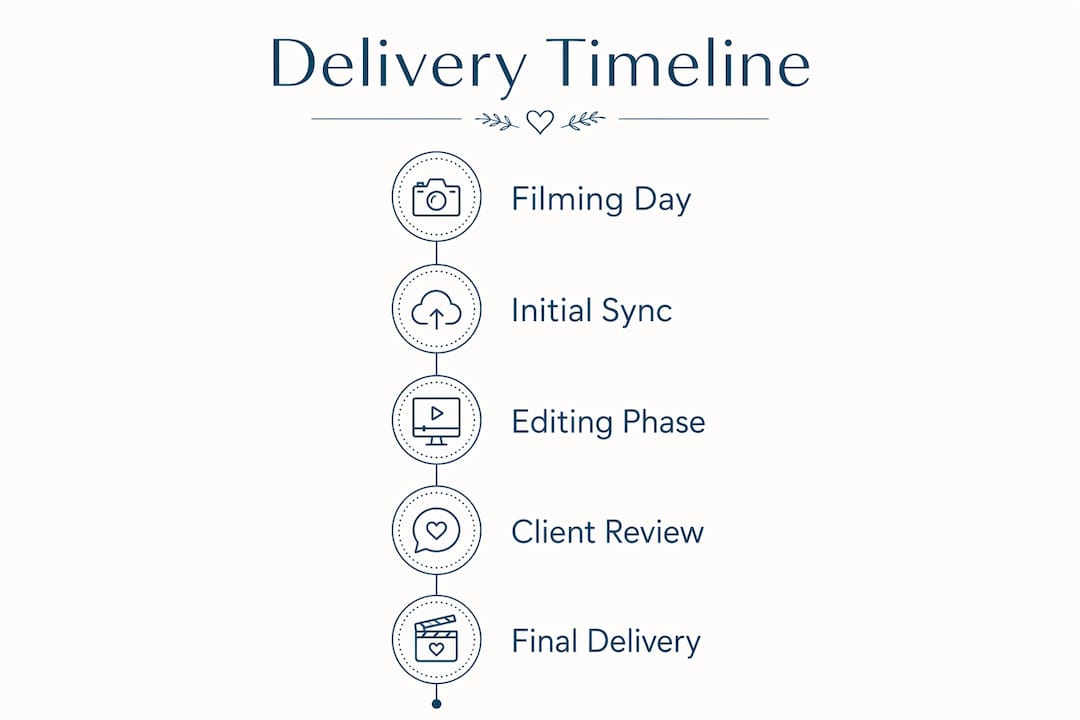
What is the wedding video delivery timeline, step by step?

The 8–12 week window isn’t padding. It reflects a real, multi-phase editing process that most couples never see. Here’s what your videographer is actually doing during that time.
The post-production process:
Footage ingest and organization (1–2 days): Every camera card gets imported, labeled, and sorted. A two-shooter wedding can generate 500GB–1TB of raw footage, and all of it needs to be reviewed before a single cut is made.
Rough cut (2–3 weeks): This is the heaviest phase. The editor watches everything, selects the best moments, builds a narrative arc, and syncs audio from separate recorders. For a multi-camera shoot, this alone can run 40–80 hours of work.
Color grading (3–5 days): Footage from different cameras rarely matches out of the box. Color grading creates a consistent, cinematic look across every clip.
Audio mix (2–3 days): Vows need to be audible over the music score. Ambient sound from the reception needs to feel present without overwhelming the dialogue. Getting that balance right takes time.
Final export and delivery (1–2 days): The finished film renders in H.264 MP4 format and uploads to the delivery platform. Even this step takes longer than most people expect, since a 5-minute film in 4K can run over 20GB.
The post-production process is genuinely artisanal. Multi-camera synchronization, music licensing, and custom color grading each require careful, hands-on attention. There’s no shortcut that doesn’t show up on screen.
What factors affect how long your wedding video takes?
Two videographers with identical skill levels can have very different delivery windows, and the reasons usually come down to a handful of variables.
Peak season backlog: May through october is the busiest stretch of the wedding calendar. Turnaround times can stretch by 3–7 days during peak months, and videographers shooting 3–4 weddings per weekend can fall 2–4 weeks behind their quoted delivery time.
Project complexity: A two-camera, eight-hour wedding is a very different editing job than a four-camera, twelve-hour destination event with a documentary-style brief. Longer weddings and more complex shoots simply take more time to cut.
Revision policies: Most videographers include one or two revision rounds in their packages. Each round adds 1–3 days to the timeline, so the number of revisions you request matters.
Client preparation: Couples who provide music preferences, shot priority lists, and editing notes before the wedding help their videographer move faster. Waiting on those details after the fact stalls the process.
Unexpected delays: Hardware failures, corrupted cards, and software crashes happen. A professional studio builds buffer time into their schedule for exactly this reason.
Videographer’s workflow: Solo videographers editing in-house typically run longer timelines than studios with dedicated editing teams. Neither is better by default, but the structure affects delivery speed.
Pro Tip: Ask your videographer during the booking call how many weddings they typically carry in their editing queue at once. A solo editor with 20 weddings in the backlog in september will almost always run longer than their contract states.
How to set expectations and communicate with your videographer
The contract is your first line of clarity. Before you sign anything, the delivery timeline for each deliverable should be written in plain language, not just “8–12 weeks” as a verbal promise. Get the sneak peek window, the highlight film date, and the full ceremony edit date documented.
Request a teaser early. A 60-second sneak peek within the first two weeks gives you something to share and confirms your videographer has started editing. It’s a small gesture that does a lot for peace of mind.
Send your music preferences before the wedding. Most videographers appreciate receiving a short list of songs you love, even if they make the final call. It removes a decision point and speeds up the rough cut phase.
Check in every 4–6 weeks. A professional videographer should send progress updates proactively, but a brief, friendly check-in is completely reasonable if you haven’t heard anything.
Discuss rush delivery upfront. If you have a hard deadline, like a honeymoon screening or a family gathering, rush delivery options typically shorten the turnaround to 4–6 weeks for an additional fee. That conversation needs to happen before you sign the contract, not after.
Be specific about revisions. Vague feedback like “can you make it feel more emotional?” costs everyone time. Timestamps and concrete notes (“the first dance section feels too short”) get you to a final cut faster.
The best videographers under-promise and over-deliver. A studio that quotes 10 weeks and delivers in eight creates a genuinely happy client. One that promises six weeks and delivers in ten creates a frustrated one, regardless of how good the film looks.
Pro Tip: When reviewing your contract, look for language about what happens if delivery runs past the stated window. A reputable videographer will have a clear policy, whether that’s a discount, a rush priority bump, or a direct communication protocol.
What Pixelgroves brings to your wedding video timeline
Pixelgroves approaches every wedding film as a piece of storytelling, not a production checklist. The team’s award-winning reputation, including the 2025 Best of Florida Wedding Photographer Award, reflects a commitment to quality that shows up most clearly in the editing room.
Every film goes through a full artisanal editing workflow: handcrafted narrative construction, carefully balanced music, and custom color grading built specifically for each couple’s footage. That process takes real time, and Pixelgroves is transparent about it from the first conversation. Couples receive a clear delivery schedule in their contract, regular progress updates, and a sneak peek within the first two weeks so they’re never left wondering.
The wedding videography process at Pixelgroves is built around one principle: you should never feel anxious about where your video is. Clear timelines, honest communication, and a genuine passion for the craft are what set a great studio apart from one that simply delivers files.
[
Ready to talk timelines and packages? Explore Pixelgroves’ wedding video packages and find the right fit for your day.
Common delays and how to handle them
Even the most organized videographer runs into obstacles. Knowing what causes delays, and how to respond, keeps the process from becoming a source of stress.
Hardware and storage failures are the most common technical culprit. Professional videographers shoot on redundant cards and back up footage to multiple drives immediately after the wedding. If your videographer doesn’t mention a backup protocol, ask about it directly. A single card failure without a backup is a catastrophic loss, and it does happen.
Peak season pile-up is the most predictable delay. If your wedding falls between june and october, build extra buffer into your expectations from the start. A videographer who quotes 10 weeks in july is working against a much heavier queue than one quoting the same window in february.
Revision loops can quietly stretch a timeline by weeks. The first revision round is usually quick. But when feedback is vague or keeps changing direction, each round adds days. The fix is simple: watch the first cut all the way through before sending notes, write specific timestamps, and consolidate all feedback into one message rather than sending notes in batches.
Music licensing issues occasionally delay delivery when a couple’s preferred song isn’t cleared for commercial use. Most professional videographers work with licensed music libraries to avoid this, but if you’ve requested a specific song, confirm early that it’s cleared.
When a delay does happen, a direct, calm message to your videographer is always the right move. Ask for a revised delivery date in writing and confirm whether anything on your end, like outstanding song choices or unsigned approvals, is holding things up. Most delays resolve quickly once both sides are communicating clearly.
Key Takeaways
Most couples wait 8–12 weeks for their highlight film because professional wedding video editing is a multi-phase, labor-intensive process that cannot be rushed without sacrificing quality.
Point | Details |
Standard highlight film window | Expect 8–12 weeks from your wedding day to final delivery. |
Sneak peek comes first | A 30–60 second teaser typically arrives within 1–2 weeks and confirms editing has begun. |
Peak season adds time | Weddings from may through october can see turnarounds stretch by 3–7 days due to higher workload. |
Contract clarity matters | Get every deliverable’s timeline in writing before signing, including revision rounds and rush options. |
Rush delivery is available | Expedited turnaround to 4–6 weeks is possible for an additional fee, but must be arranged before the contract is signed. |
Recommended
Comments