Florida Outdoor Wedding Photography Lighting Guide
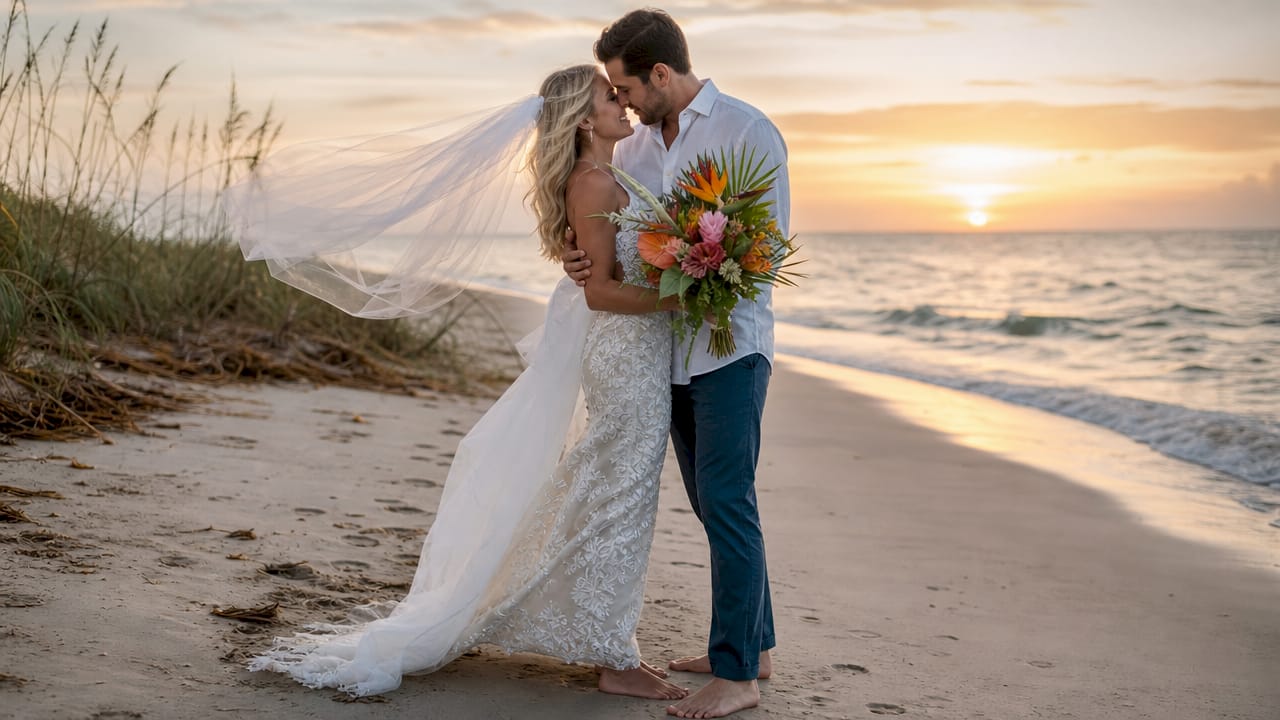
Florida outdoor wedding photography lighting is the practice of timing, positioning, and supplementing natural light to produce flattering, emotionally resonant wedding portraits in the state’s distinct climate and terrain. Florida’s intense sun, coastal humidity, and dramatic sunsets create lighting conditions unlike anywhere else in the country. Master those conditions and your wedding photos will look like they belong in a magazine. Ignore them and even the most beautiful venue will produce squinting faces and blown-out skies. This guide covers every variable you need to control, from the hour you schedule your ceremony to the shade you choose for portraits.
What are the best natural lighting times for Florida outdoor weddings?
The single most important decision you make for your wedding photos is not the venue or the photographer. It is the time of day you schedule your shoot. Florida’s sun moves fast and hits hard, so the window for flattering natural light is narrower than couples expect.
Golden hour is the undisputed best lighting condition for outdoor wedding portraits. The golden hour delivers warm, diffused light with minimal harsh shadows, enhancing skin tones and creating a romantic, almost cinematic atmosphere. That warmth is not just aesthetic. It means your photographer spends less time correcting color casts and more time capturing genuine moments. On Florida’s Gulf Coast, golden hour can stretch 45 to 60 minutes before sunset, giving you a generous window for portraits, couple shots, and reception detail photos.
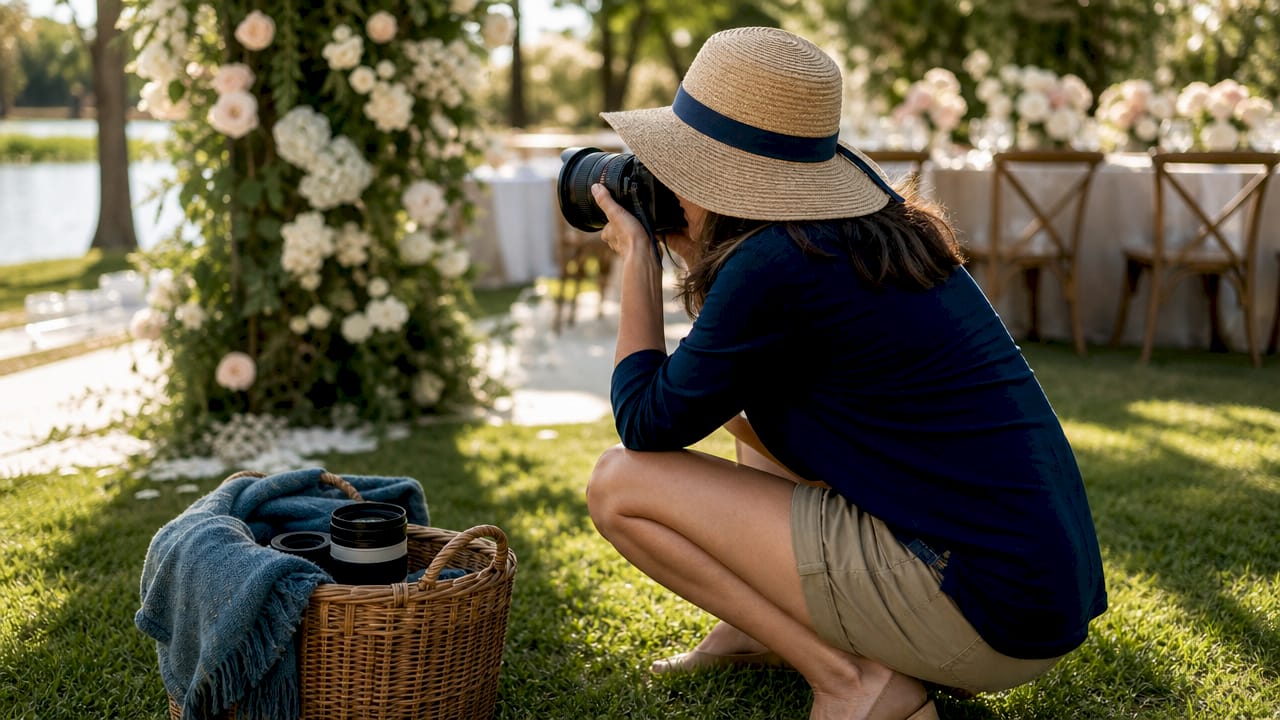
Sunrise ceremonies are a genuinely underused option. Starting 10 to 15 minutes before sunrise gives you soft pre-dawn light followed immediately by the first warm rays of the morning sun. The result is intimate, dreamy photos with almost no crowds on the beach and a stillness that afternoon ceremonies simply cannot replicate. Yes, it requires an early call time. The payoff in image quality is worth it.
Midday sun, roughly 10 a.m. to 3 p.m., is the most difficult window to shoot in. Harsh midday sun creates strong shadows directly under the eyes and nose, producing unflattering contrast that editing cannot fully fix. This is not a solvable problem with filters alone. It requires repositioning, shade, or supplemental lighting, all of which add complexity and cost.
Seasonally, March through October offers the clearest skies and most consistent golden hour quality in Florida. Spring and fall are especially reliable because afternoon thunderstorms are less frequent than in peak summer, and the sun angle produces longer, softer shadows during golden hour.
Golden hour: 45 to 60 minutes before sunset, best for portraits and couple shots
Sunrise: 10 to 15 minutes before the sun breaks the horizon, ideal for intimate beach ceremonies
Midday: avoid for primary portraits if possible; use shade and fill flash if unavoidable
Best months: March through May and September through October for consistent light quality
Pro Tip: Build your wedding day timeline backward from sunset. If golden hour starts at 7:15 p.m., schedule your couple portraits for 6:30 p.m. and your ceremony to conclude no later than 6:15 p.m. Share this logic with your planner and hair and makeup team so the entire day aligns with the light.
How do you manage harsh Florida outdoor lighting conditions?
Florida’s sun is not polite. Even on a beautiful day, midday light can flatten faces, create raccoon-eye shadows, and wash out the delicate details of a wedding dress. Knowing how to work around those conditions separates a good photographer from a great one.
The most reliable technique is strategic shade. Open shade, meaning shade that is not directly under a tree canopy, produces soft, even light that wraps around faces naturally. A building overhang, a garden wall, or the shadow side of a venue structure all qualify. The key is finding shade with a large, open sky in front of the couple so reflected skylight fills in from the front.
Tree canopies are a trap many couples do not anticipate. Dappled light filtering through leaves creates speckled patterns across faces and dresses that look distracting in photos. If your venue has beautiful oak trees, position your couple at the edge of the canopy where the light is even, not underneath where the spots appear.
Reflectors are a low-tech solution that works exceptionally well in Florida’s bright conditions. A silver or white reflector bounced toward the shaded side of a face fills in shadows without adding the artificial look of flash. Many photographers carry collapsible 5-in-1 reflectors for exactly this purpose. Diffusers, which are translucent panels held between the sun and the couple, soften direct sunlight into something closer to overcast light.
Open shade from buildings or walls: even, flattering light with no dappling
Reflectors: fill shadows on the shaded side of faces without flash
Diffusers: soften direct sun for midday portraits when shade is unavailable
Repositioning: turn the couple so the sun is behind them for a backlit look with a fill source in front
Pro Tip: Ask your photographer to do a venue walkthrough at the same time of day as your ceremony, at least one month before the wedding. Light changes dramatically by season in Florida, and a walkthrough in January tells you nothing about June conditions.
What role can artificial lighting play in Florida outdoor wedding photography?
Natural light is the goal. Artificial light is the safety net that makes natural light look even better. Portable flash and LED lights fill shadows and highlight key details when natural light alone creates too much contrast or falls short during transitional hours.
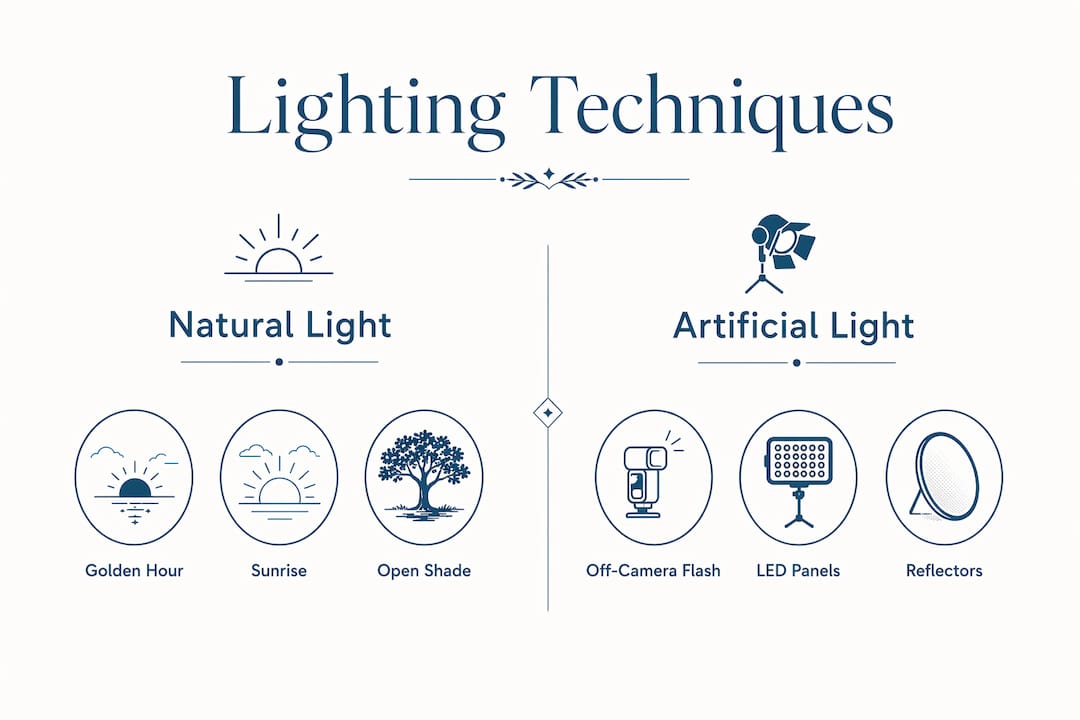
Off-camera flash is the most versatile tool for outdoor Florida weddings. Positioned to the side or slightly behind the couple, a single off-camera strobe can balance a bright sky with a properly exposed foreground, a technique called dragging the shutter. The result looks natural because the flash mimics the direction and quality of sunlight rather than blasting light straight at the subject.
During golden hour, a subtle LED panel or a low-powered strobe adds a kiss of light to the couple’s faces without competing with the warm ambient glow. Used incorrectly, artificial light at golden hour kills the mood entirely. Used correctly, it separates the couple from a slightly underexposed background and makes every detail of the dress and flowers pop.
Lighting type | Best use case | Limitations |
Off-camera flash | Balancing bright sky with foreground | Requires assistant or light stand |
Portable LED panel | Continuous fill during golden hour | Battery life limits extended use |
On-camera flash | Quick reception or documentary shots | Flat, direct light; less flattering |
Reflector (passive) | Filling shadows in open shade | Requires an assistant to hold |
Balancing artificial and natural light is a skill, not a formula. The best Florida wedding photographers treat flash as a complement to the sun, not a replacement for it. When you review portfolios, look for outdoor photos taken at midday or in deep shade. Those images reveal whether a photographer can use supplemental light without making it obvious.
How do you choose Florida outdoor wedding photo locations based on lighting?
Location and lighting are inseparable. The most photogenic venue in Florida will produce mediocre photos if the light hits it wrong, and a modest garden can produce stunning images at the right hour.
Florida’s beaches, particularly spots like Captiva Island, offer something rare: an unobstructed western horizon. Captiva Island’s open beach views allow the full arc of a sunset to unfold behind the couple, producing that iconic Florida wedding image with warm sky and reflective water. The light quality there during golden hour is genuinely exceptional because there are no buildings or tree lines cutting off the low sun.
Gardens and parks introduce more variables. Tall hedges and mature trees create pockets of shade that can be beautiful or problematic depending on the time of day. For Florida wedding photo locations with heavy tree cover, schedule portraits in the late afternoon when the sun is low enough to filter through at a flattering angle rather than straight down.
Open fields and meadows offer beautiful light but no shade, making them best suited for golden hour or overcast days. Overcast light in Florida is actually underrated. A thin cloud layer acts as a natural diffuser, producing soft, even light across the entire scene with no harsh shadows and no need for reflectors.
Practical considerations matter too. Privacy affects how freely your photographer can move and position you. Weather in Florida can shift quickly, so any outdoor location needs a covered backup area within walking distance. Wind near the coast affects hair and veil positioning, which in turn affects how light falls on faces.
How do you plan your Florida wedding day schedule for perfect lighting?
A well-built wedding day timeline is a lighting plan in disguise. Every event on the schedule either protects or wastes your best light windows.
Work backward from sunset. Identify the exact sunset time for your wedding date and location using a tool like PhotoPills or The Photographer’s Ephemeris. Your couple portraits should begin no later than 75 minutes before sunset.
Schedule hair and makeup to finish at least 90 minutes before your portrait session begins. Running late on getting ready is the single most common reason couples miss golden hour.
Plan your ceremony to end 20 to 30 minutes before portraits begin. This gives time for family formals while the light is still good, leaving the best light for couple shots.
Schedule photos about an hour before sunset to take full advantage of golden hour for portraits and ceremony shots. Share this schedule with your officiant so the ceremony length is controlled.
Build a cloudy-day contingency. Overcast conditions shift the lighting plan but do not ruin it. Agree with your photographer in advance on which locations work best when the sky is flat.
Working with your photographer on lighting cues is not micromanaging. It is smart planning. A photographer who understands Florida’s light will tell you exactly when to step outside for portraits and when to stay in the shade. Trust that guidance. The couples who get the most stunning photos are the ones who treat the timeline as a creative tool, not just a logistical checklist. For spring wedding planning, seasonal light angles and afternoon storm patterns add another layer of timing to consider.
Key takeaways
Florida outdoor wedding photography lighting succeeds when you build your entire wedding day timeline around golden hour, use open shade and portable fill light to manage midday sun, and choose locations with unobstructed western horizons for sunset portraits.
Point | Details |
Golden hour is non-negotiable | Schedule couple portraits to begin 60 to 75 minutes before sunset for the best natural light. |
Sunrise ceremonies are underused | Starting 10 to 15 minutes before sunrise produces soft, flattering light with no crowds. |
Avoid dappled tree shade | Position couples at the edge of canopies, not underneath, to prevent speckled light on faces. |
Artificial light complements, not replaces | Off-camera flash and LED panels fill shadows without killing the natural mood of golden hour. |
Location and timing are linked | Open beach locations like Captiva Island offer unobstructed sunset light that enclosed venues cannot match. |
What I’ve learned about Florida light after years behind the lens
By Kellie
The most common mistake I see couples make is treating lighting as the photographer’s problem rather than a shared planning decision. They book a venue they love, set a ceremony time that works for the caterer, and then wonder why their portraits look flat or overexposed. Lighting is not something a skilled photographer fixes in post-production. It is something you build into the day from the start.
I have shot weddings at noon in direct Florida sun and at golden hour on Captiva Island, and the difference is not subtle. It is the difference between photos you frame and photos you quietly skip past in the album. No amount of editing recovers the warmth and dimension that golden hour light gives you for free.
The couples who get the most from their photography are the ones who ask their photographer one simple question during the planning process: “What time should our ceremony end to protect our portrait light?” That question alone signals that you understand what matters. It also gives your photographer permission to be honest about the timeline rather than just agreeable.
Florida’s light is genuinely extraordinary when you work with it. The warm, low sun bouncing off Gulf water at 7 p.m. in October is something photographers in other states travel here to experience. You are already here. Use it.
— Kellie
How Pixelgroves captures your Florida wedding light perfectly
[

Pixelgroves has spent years mastering Florida outdoor wedding photography lighting across the state’s most beautiful venues, from Gulf Coast beaches to Central Florida gardens. The team holds the 2025 Best of Florida Wedding Photographer Award and brings a lighting-first planning approach to every wedding. Before your day arrives, Pixelgroves conducts venue walkthroughs, builds a lighting-aware timeline with you, and arrives with the portable equipment needed to handle any condition Florida throws at you. Explore wedding photography styles that match your vision, review pricing and packages, or reach out to start planning a shoot built around your best light.
FAQ
What is the best time of day for outdoor wedding photos in Florida?
Golden hour, the 45 to 60 minutes before sunset, produces the warmest and most flattering natural light for outdoor wedding portraits in Florida. Sunrise ceremonies starting 10 to 15 minutes before the sun breaks the horizon are a close second for soft, intimate images.
How do photographers handle harsh midday sun at Florida weddings?
Photographers use open shade, reflectors, and off-camera flash to manage midday sun. The goal is to find evenly lit shade without dappled tree light, then use a reflector or low-powered strobe to fill in any remaining shadows on faces.
Which Florida locations are best for outdoor wedding photography lighting?
Open beach locations with unobstructed western horizons, like Captiva Island, offer the best natural lighting for sunset portraits. Gardens and parks work well in late afternoon when the sun angle is low enough to filter through trees without creating harsh downward shadows.
Does cloudy weather ruin outdoor wedding photos in Florida?
Overcast conditions actually produce soft, even light that eliminates harsh shadows and reduces the need for reflectors or fill flash. Thin cloud cover acts as a natural diffuser, making it one of the more forgiving lighting conditions for outdoor portraits.
How far in advance should I plan my wedding day timeline around lighting?
Share your exact wedding date and venue location with your photographer at least three months before the wedding. Your photographer can calculate precise sunset times, identify the best portrait windows, and find award-winning photographers who specialize in building lighting-aware timelines for Florida outdoor weddings.
Recommended
Comments