Beach Wedding Photography Checklist for Couples

A beach wedding photography checklist is a structured shot-by-shot guide covering every key moment, detail, and environmental variable unique to outdoor coastal ceremonies. Unlike a generic wedding photo list, it accounts for golden hour timing, tide charts, wind management, permit requirements, and gear choices that determine whether your album looks breathtaking or rushed. Cameras from Canon, Nikon, and Sony each handle bright coastal light differently, and knowing what to ask your photographer before the day makes a measurable difference. This checklist covers every category you need, from getting-ready shots to sunset silhouettes, so nothing falls through the cracks.
1. Must-have shots for your beach wedding photography checklist
Every strong beach wedding album starts with a clear shot list organized by category. Getting-ready moments, the processional, vows, the first kiss, portrait sessions, group photos, and reception highlights form the backbone. What separates a beach ceremony photography shot list from a standard one is the addition of environment-specific moments your photographer must actively plan for.
Beach-specific shots to include:
Wind catching the veil or dress during the processional
Barefoot footprints in wet sand near the shoreline
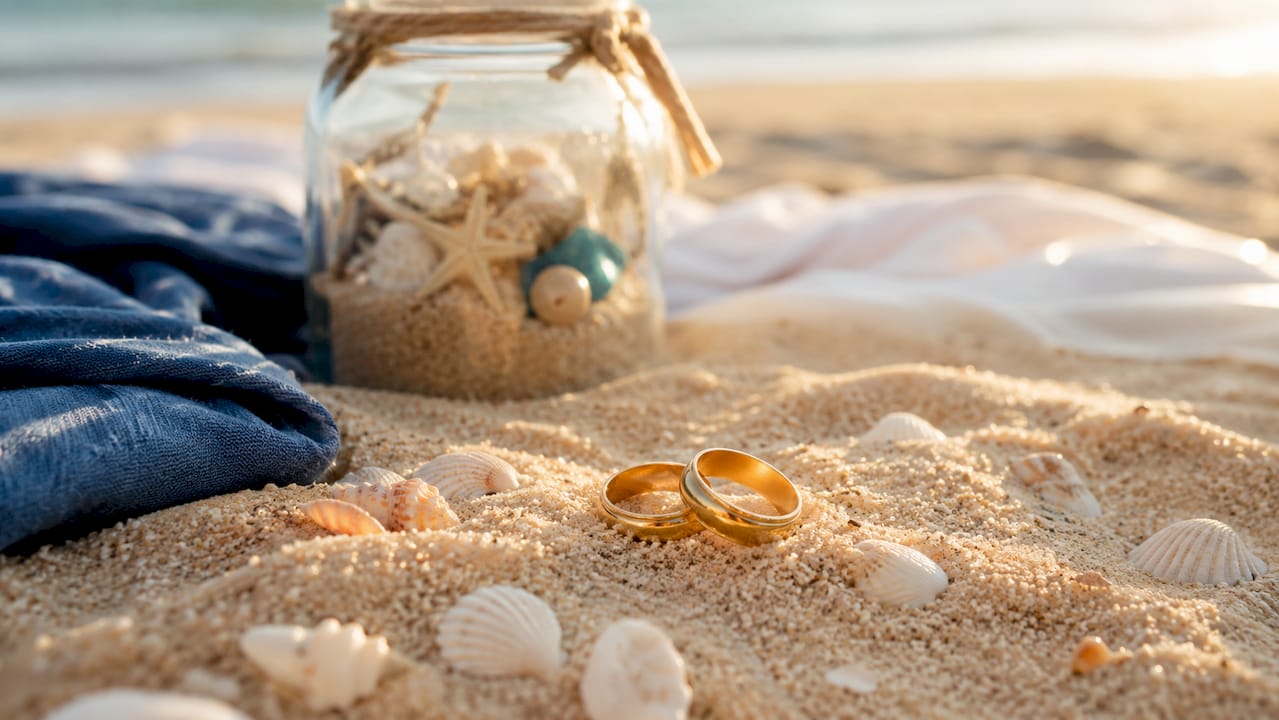
Rings placed on a smooth stone or nestled in a seashell
Seashell or driftwood ceremony décor close-ups
Couple silhouettes against the sunset sky
Candid guest reactions during vows, captured from a side angle
Aerial or wide establishing shot showing the full beach setting
Barefoot couple walking along the water’s edge post-ceremony
These wedding detail shots form a checklist of their own. Rings on sand, beach-themed favors, the flower girl’s basket filled with petals, and the officiant’s table all deserve individual frames. A second shooter is highly recommended for wide beach layouts because a single photographer physically cannot cover both the couple’s faces and candid guest reactions simultaneously during the processional.
Pro Tip: Use a shared Google Sheet or a dedicated app like WeddingWire to track shot coverage in real time. Give your photographer a printed copy and keep one yourself so you can cross-reference during the day.
2. How to plan your beach wedding photography timeline
Timing is the single biggest variable in beach ceremony photography, and getting it wrong costs you the best light of the day. The ceremony should end 30 to 45 minutes before sunset to open a portrait window during golden hour. That window delivers warm skin tones, dramatic skies, and soft directional light that no studio strobe can replicate.
A practical timeline structure looks like this:
Check the exact sunset time for your wedding date and location using an app like PhotoPills or The Photographer’s Ephemeris.
Work backward from sunset to set your ceremony end time.
Schedule the first look 90 minutes before the ceremony to allow portraits before guests arrive.
Build in 15 minutes of walking and transition time between each location, since beach terrain and parking add delays that couples consistently underestimate.
Reserve 45 to 60 minutes immediately before sunset exclusively for couple portraits.
Confirm tide times for your date so your planned shoreline spots are actually accessible.
Golden hour portraits offer flattering light that is genuinely difficult to replicate at any other time of day. Scheduling around it is not a stylistic preference. It is a technical necessity for top-quality results.
Pro Tip: Share your finalized timeline with your wedding planner, officiant, and photographer at least two weeks before the wedding. A coordinated photography schedule prevents the ceremony from running long and eating into your golden hour window.
3. Essential photography gear for beach weddings
Photography gear for beach weddings must balance optical performance with durability against sand, salt air, and moisture. The wrong lens choice on a bright beach produces flat, cluttered images regardless of how skilled the photographer is.
Key gear recommendations:
24-70mm f/2.8 lens: The workhorse for ceremony coverage, group shots, and detail work. Versatile enough to handle most situations without a lens swap.
70-200mm f/2.8 telephoto lens: The most important lens for beach work. Telephoto compression isolates the couple from a busy background and produces intimate portraits that wide-angle lenses cannot achieve.
CPL (circular polarizing) filter: Cuts glare off water and wet sand, deepens sky color, and reduces haze. Non-negotiable for midday or early afternoon shooting.
Weather-sealed camera bodies: Canon R5, Nikon Z8, and Sony A7R V all offer weather sealing that protects against salt spray and humidity.
Lens cloths and sealed bags: Sand is abrasive and gets into everything. Bring multiple microfiber cloths and keep lenses in sealed pouches between shots.
Portable reflector: A collapsible 5-in-1 reflector fills shadows on faces during harsh midday light without adding artificial flash.
Shot type | Recommended lens |
Wide ceremony overview | 24-70mm at 24mm |
Couple portraits | 70-200mm at 135-200mm |
Detail shots (rings, décor) | 100mm macro or 70-200mm close focus |
Group photos | 24-70mm at 35-50mm |
Candid guest moments | 70-200mm at 70-100mm |
A second shooter also functions as a gear advantage. While the lead photographer works the 70-200mm for compressed couple portraits, the second shooter covers wide ceremony angles and candid reactions simultaneously.
4. Logistical considerations and preparation steps
The logistics behind beach wedding photography are more complex than most couples expect, and skipping any of them creates day-of problems that no amount of post-processing can fix.
Beach permits are required for nearly all organized beach events. In South Walton, Florida, fees start at $50, but costs vary by county, season, and group size. Some permits also restrict the hours during which photography equipment can be set up, which directly affects your timeline. Apply at least 60 days in advance.
Preparation steps that protect your shoot:
Scout the beach with your photographer at the same time of day as your wedding to assess sun angle, background distractions, and crowd levels.
Pull tide charts for your exact date. High tide can eliminate the wide, flat sand you planned to use for group photos.
Assign a dedicated dress attendant whose only job is managing the bride’s veil and dress during the ceremony. Wind management is a practical necessity, not a luxury, since uncontrolled fabric can obscure faces in key moments.
Identify a weather backup location within 10 minutes of the beach. Afternoon storms are common in coastal Florida from June through September.
Arrive early enough to secure your permitted area before other beachgoers set up.
Pro Tip: Schedule your ceremony for a weekday morning or early evening if your beach allows it. Crowds thin significantly, background distractions drop, and your photographer has far more control over composition.
5. Creative beach wedding photo ideas beyond the basics
The best beach wedding albums contain shots that could only have been taken at that specific location, at that specific moment. Experienced beach photographers consistently advise embracing environmental factors like wind and natural light rather than fighting them, because those elements create organic, dynamic images that posed studio work cannot match.
Standard shots versus creative alternatives:
Standard shot | Creative alternative |
Couple standing facing camera | Couple walking away toward the water, shot from behind |
Formal group portrait | Candid group laughing during a barefoot walk along the shoreline |
Ring close-up on hand | Rings resting in a seashell with wet sand in the background |
First kiss at altar | First kiss silhouette against the sunset sky |
Seated reception table shot | Aerial view of the full reception setup from a dune or elevated angle |
Beyond the table above, consider these beach wedding photo ideas that most couples overlook:
Water reflection portraits taken at the shoreline during the last 10 minutes of golden hour
Macro shots of sand texture, sea glass, or driftwood used as décor
Candid moments of children at the reception playing near the water
The couple’s hands intertwined with the ocean horizon as the background, shot at 200mm for maximum compression
“The beach gives you everything a photographer needs: movement, texture, light, and emotion. The couples who get the best albums are the ones who trust the environment and stay present in the moment.” — Joanna Kustra
Cute photoshoot ideas that work in studios often translate beautifully to the beach with minor adjustments. Replace a plain backdrop with the ocean horizon and the result is consistently stronger.
Key takeaways
A complete beach wedding photography checklist succeeds when it combines golden hour timing, pre-event scouting, telephoto lens selection, permit preparation, and a detailed shot list built around the beach environment.
Point | Details |
Time the ceremony around sunset | End the ceremony 30 to 45 minutes before sunset to secure the golden hour portrait window. |
Scout before the wedding day | Visit the location with your photographer at the same time of day to confirm sun angle and backgrounds. |
Use a telephoto lens | A 70-200mm lens compresses the scene, isolates the couple, and reduces background clutter on busy beaches. |
Secure permits early | Beach permits are required for most organized events and can restrict setup hours, so apply at least 60 days out. |
Assign a dress attendant | Wind is unpredictable. A dedicated attendant prevents fabric from obscuring faces during key ceremony moments. |
What I’ve learned from shooting beach weddings
After photographing dozens of coastal ceremonies, the couples who walk away with the strongest albums share one trait: they planned the logistics carefully and then let go of the plan on the day itself. The checklist is a tool, not a script.
The biggest mistake I see is couples who treat golden hour as optional. It is not. Shooting during golden hour is non-negotiable for top-quality beach portraits. When a ceremony runs 20 minutes long because no one coordinated with the officiant, that window disappears, and no amount of editing recovers it.
I also think the conventional advice to “just relax and trust your photographer” undersells how much couples can do to set their photographer up for success. Sharing a detailed shot list, confirming the permit is secured, and doing a location scout together are not micromanaging. They are the difference between a good album and an exceptional one.
Local knowledge matters more than most couples realize. A photographer who knows the beach location handles light shifts, unexpected crowds, and permit restrictions without disrupting the day. That familiarity is worth more than a slightly lower price from someone who has never shot at your venue.
Finally, do not underestimate the power of the unplanned moment. The checklist captures the structure. The emotion fills in the rest.
— Kellie
How Pixelgroves captures your perfect beach wedding
Pixelgroves brings award-winning storytelling to every beach ceremony, with a process built around the exact timing, scouting, and shot-list coordination this article covers. The team holds the 2025 Best of Florida Wedding Photographer Award and has photographed coastal weddings across Florida’s most demanding light conditions.
[

Whether you need full-day coverage or a focused elopement package, Pixelgroves tailors every session to your location, timeline, and style. Browse the full range of wedding photography styles to find the approach that fits your vision, or review pricing and packages to plan your coverage hours. Contact Pixelgroves to schedule a consultation and lock in your date before the season fills.
FAQ
What should be on a beach wedding photography checklist?
A beach wedding photography checklist covers getting-ready shots, ceremony moments, couple portraits during golden hour, group photos, reception highlights, and beach-specific detail shots like barefoot footprints, ring-in-sand compositions, and sunset silhouettes.
When is the best time for beach wedding photos?
The best window for portraits is 45 to 60 minutes before sunset, when golden hour delivers warm, flattering light and dramatic skies. Schedule your ceremony to end 30 to 45 minutes before sunset to protect this window.
Do you need a permit for beach wedding photography in Florida?
Yes. Most organized beach events in Florida require a permit, with fees starting at $50 in areas like South Walton. Permit requirements can also restrict setup hours, so apply at least 60 days before your wedding date.
What camera gear works best for beach weddings?
A weather-sealed camera body paired with a 70-200mm telephoto lens and a CPL filter covers most beach wedding scenarios. The telephoto lens compresses backgrounds and reduces visual clutter, while the CPL filter manages glare from water and sand.
How do you handle wind during beach wedding photography?
Assign a dedicated dress attendant whose sole job is managing the bride’s veil and dress throughout the ceremony. Wind can also be used creatively for movement shots, but uncontrolled fabric during vows or the first kiss creates problems that cannot be fixed in editing.
Recommended
Comments