Your Wedding Day Photography Schedule Made Easy
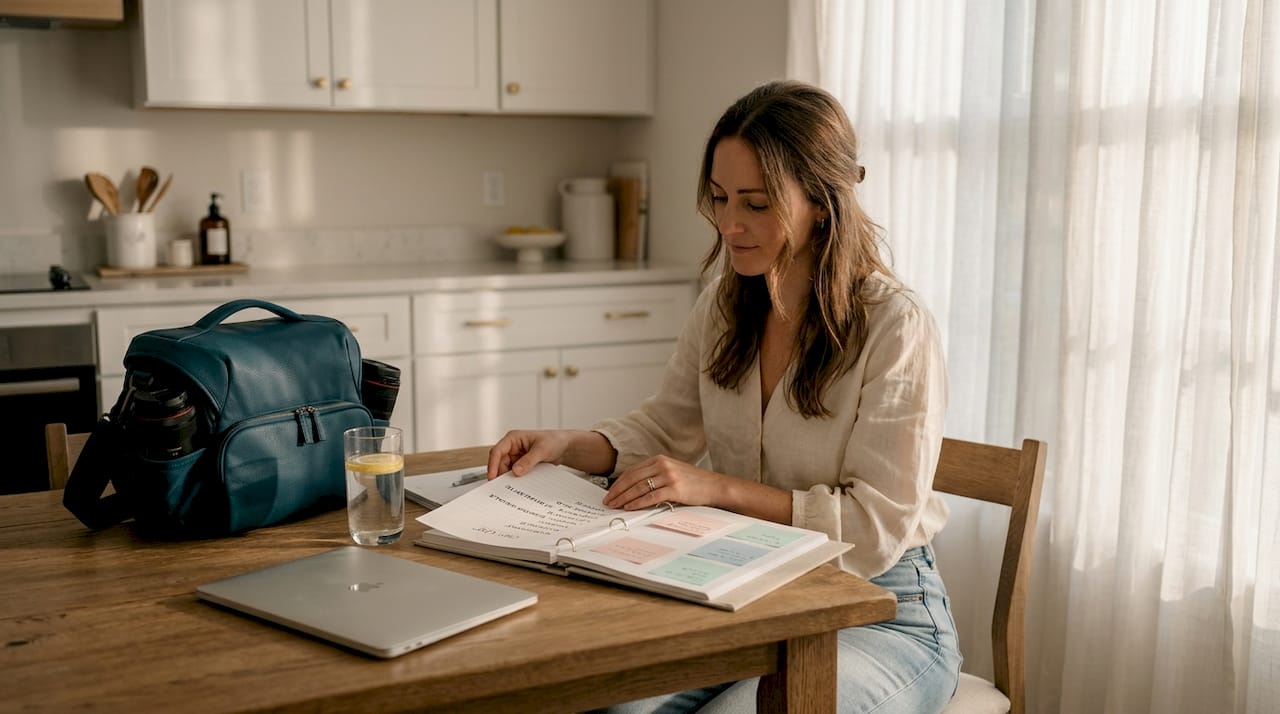
Planning your wedding day photography schedule without a clear structure is how couples end up with beautiful getting-ready shots and almost nothing from the reception. The gap between “we have a photographer for 8 hours” and “every moment was captured perfectly” is a well-built timeline. This guide breaks down the key criteria for building one, walks you through five popular schedule templates, compares them side by side, and gives you the expert tips to personalize whichever approach fits your day.
Table of Contents
Key takeaways
Point | Details |
Build in buffer time | Add 30 to 60 minutes of total buffer across the day to absorb inevitable delays. |
Plan portraits around golden hour | Schedule your ceremony earlier so portraits fall during golden hour for the best light. |
Keep family photos tight | Limit family portrait sessions to 20 to 30 minutes to avoid fatigue and keep energy genuine. |
First look reduces pressure | A first look shifts most couple portraits before the ceremony, freeing up cocktail hour. |
Trust your photographer | Experienced photographers manage timeline adjustments in real time so you don’t have to. |
1. Key criteria for your wedding day photography schedule
Before you choose a template, you need to understand what makes any photography schedule work. The structure is less about clock times and more about how you sequence key photo blocks and protect them from the chaos that creeps into every wedding day.
Realistic transitions and buffer time. Most timelines collapse because they treat every transition as instant. Experts recommend 5 to 10 minutes of buffer between moments at the same location and 10 to 20 minutes when you’re moving between venues or buildings. You also want roughly 30 minutes of buffer after getting ready, since that phase almost always runs late. Total buffer across the full day should land between 30 and 60 minutes.
Strategic placement of photo blocks. Every wedding day has the same core photography blocks: getting ready, first look (optional), couple portraits, wedding party portraits, family formals, ceremony, and reception details. Coverage estimates run 30 to 45 minutes for detail shots, 60 to 90 minutes for couple portraits when a first look is included, 30 to 45 minutes for the wedding party, and 20 to 40 minutes for family formals. Knowing those numbers helps you slot blocks realistically rather than guessing.
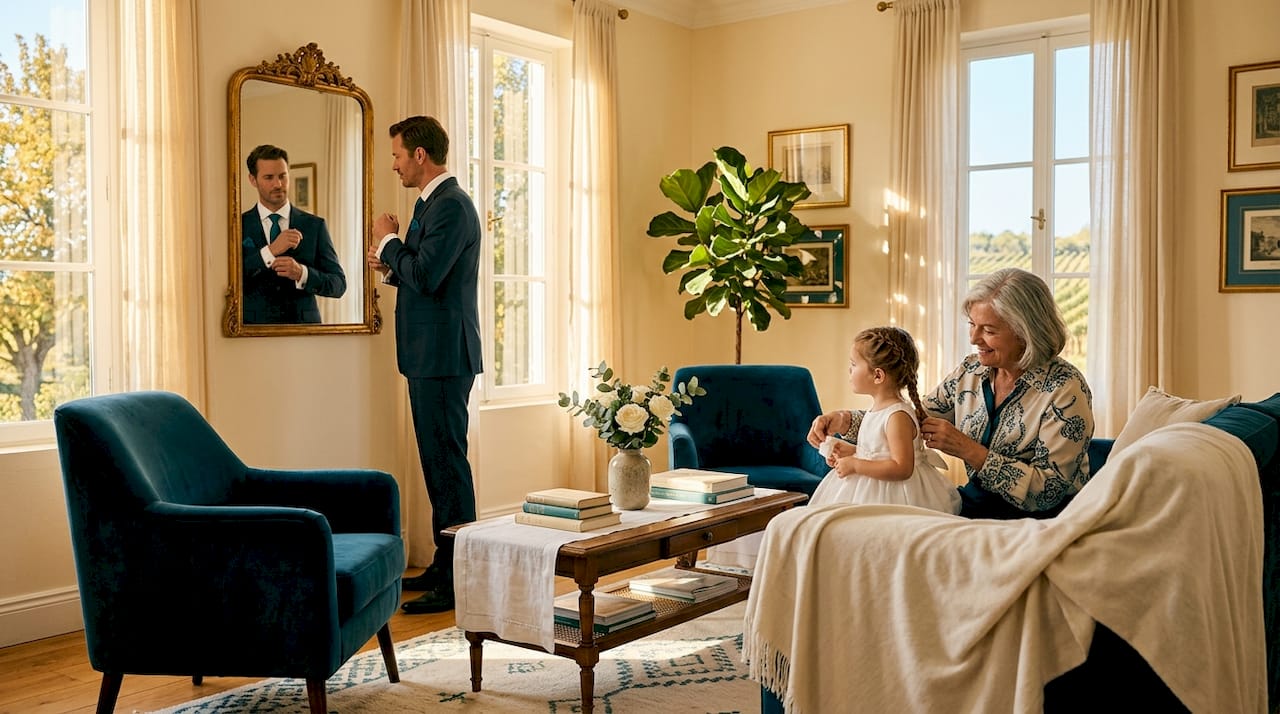
Golden hour priority. Golden hour is the 30 to 60 minutes before sunset, and in northern areas during summer it can stretch to 90 minutes. The mistake couples make is scheduling their ceremony during that window. When the ceremony runs during golden hour, you burn through the best light doing vows instead of portraits. Plan the ceremony earlier, protect that golden hour window, and your portraits will look completely different.
Keeping family photos efficient. Smile fatigue sets in fast during family formals, especially with kids and older relatives. A tightly managed 20 to 30 minute session with a pre-prepared shot list produces more genuine smiles than a sprawling 45 minute session where everyone is exhausted by the end.
Flexible vs. rigid timelines. A minute-by-minute script feels reassuring but tends to break within the first hour. Flexible timelines with protected blocks and buffer zones adapt to reality. Your photographer has seen hundreds of days run late, go off script, and still deliver great photos because they know how to move moments around without losing what matters.
Pro Tip: Share your final family photo list with both your photographer and a point person on the day. That one person’s job is to gather family groups so your photographer isn’t hunting for Aunt Carol between every shot.
2. Top 5 popular wedding day photography schedule templates
These are real frameworks couples use, not theoretical constructs. Read through all five before you decide which fits your day.
4 PM ceremony with first look, 8-hour coverage. Photography starts around 10 AM with getting ready shots, first look at 1 PM, couple and wedding party portraits until 3 PM, ceremony at 4 PM, cocktail hour from 5 to 6 PM, and reception coverage through 7 PM. The first look here is the linchpin. It moves almost all couple portraits before the ceremony, so you walk into your reception relaxed instead of disappearing for 45 minutes during cocktail hour.
4 PM ceremony without a first look. Getting ready coverage begins around 11 AM, ceremony runs at 4 PM, followed by a 30-minute family formal session, then a compressed couple portrait session during cocktail hour from 5 to 5:45 PM. This works for couples who want the traditional first-glimpse moment at the ceremony. The trade-off is that your portrait window is shorter and shares time with cocktail hour, so guests may notice your absence.
5 PM later ceremony with first look. Photography starts at noon, first look at 2:30 PM, portraits and wedding party coverage until 4:30 PM, ceremony at 5 PM. The later ceremony actually opens up a strong golden hour window post-ceremony, especially in summer. Sunset portraits around 7:30 to 8 PM can deliver stunning light even after the ceremony ends. This schedule works beautifully for venues with late summer sunsets.
3 PM earlier ceremony with first look. Getting ready coverage begins at 9 AM, first look at noon, portraits and wedding party until 2:30 PM, ceremony at 3 PM, reception starting around 5 PM. This pushes everything earlier and gives you a relaxed evening reception. The downside is that a 3 PM ceremony often falls in harsh afternoon light, so outdoor portrait locations with shade matter more here.
Micro-wedding or intimate ceremony schedule. With a smaller guest list and a 4 to 5 hour coverage window, the priority shifts to getting ready details, a single couple portrait session, a short ceremony, and a celebratory dinner or gathering. There are no wedding party portraits and no extended family formals. Coverage runs 30 minutes for details, 45 minutes for couple portraits, and 30 minutes for the ceremony itself. This schedule works best when you consider photography styles that emphasize intimate storytelling over traditional formal coverage.
3. Comparing the top schedule options
Use this table to find which template aligns with your priorities before you start customizing.
Template | Coverage hours | First look | Best for | Key trade-off |
4 PM with first look | 8 hours | Yes | Most wedding styles, relaxed timeline | Requires early start |
4 PM without first look | 7 to 8 hours | No | Traditional couples | Compressed portrait window |
5 PM later ceremony | 8 to 9 hours | Yes | Summer weddings, late sunsets | Later reception end time |
3 PM earlier ceremony | 8 hours | Yes | Couples wanting long receptions | Harsh afternoon light risk |
Micro-wedding | 4 to 5 hours | Optional | Intimate gatherings, small budgets | Limited coverage depth |
The choice between a first look and no first look affects more than just a single moment. First look sessions shift the bulk of couple and wedding party portraits before the ceremony, which reduces pressure during cocktail hour and generally makes the couple calmer walking down the aisle. Couples who skip the first look reclaim that emotional reveal for the ceremony, which is a legitimate priority. Just know the compression it creates downstream.
Weather, venue logistics, and travel time between locations also shift which template works. If you have two venues or a 30-minute drive between getting ready and the ceremony, add at least 20 minutes to your location transition buffer on top of whatever template you choose. A well-coordinated photography process accounts for all of these variables before the day begins.
4. Expert tips for creating your personalized photo session schedule
Building your own wedding photography timeline is straightforward once you have the framework. Here are the strategies that separate polished schedules from the ones that fall apart by 3 PM.
Work backward from golden hour and ceremony time. Find your sunset time on your wedding date. Subtract 90 minutes to identify when portraits should start for ideal light. Then build the rest of the day backward from there.
Lock in your ceremony time first. Every other block on your schedule anchors to the ceremony. Once you know when you’re walking down the aisle, you can calculate when getting ready needs to end, when portraits begin, and when coverage starts.
Coordinate hair and makeup with your photographer’s start time. If your photographer arrives at 10 AM but hair and makeup doesn’t finish until noon, you’ve lost two hours of getting-ready coverage. Talk to your hair and makeup team about realistic finish times and review bridal hair planning tips early in the process to avoid surprises.
Keep your family photo list to 10 to 15 groupings maximum. More than that and you’re looking at 45 to 60 minutes of formals, which exhausts everyone. Prioritize the combinations that matter most to you and your families.
Communicate your photo priorities clearly. Your photographer cannot read your mind about which moments matter most. Tell them in advance: if getting a specific shot with your grandmother means pausing something else, say so.
Schedule reception details with your photographer in mind. If you want sunset portraits during dinner, decide in advance which toasts or reception events get shortened or reordered. Planning golden hour portraits around reception events is much easier than improvising it in the moment.
Pro Tip: Send your finalized timeline to every vendor, not just your photographer. When your DJ, caterer, and planner all have the same document, the whole day runs tighter with far less scrambling.
What I’ve learned from years of photographing weddings
I’ve worked alongside hundreds of couples and seen every kind of timeline succeed and fail. My honest take? The couples who had the most relaxed, photogenic days were rarely the ones with the tightest minute-by-minute schedules. They were the ones who trusted us to manage the flow and gave us enough buffer to work with.
The golden hour piece is where I feel most strongly. I’ve watched couples fight to schedule their ceremony at sunset because it sounds romantic, and it is romantic. But what they don’t see is what they gave up: portraits with flat, harsh light, rushed family formals, and a reception we’re scrambling to reach on time. When portraits happen during golden hour instead, the images are in a completely different category of beautiful.
Buffer time saved real weddings I worked on from complete chaos. A 25-minute delay on getting ready, a limo running late, a grandmother who needed extra time walking to her seat. Without buffer built in, every one of those moments would have cascaded into lost photos. With buffer, they were absorbed invisibly.
My advice is to come to your timeline conversation with priorities, not a fixed script. Tell us what cannot be missed and what you’d trade to protect it. That’s the conversation that actually produces a great day.
— Kellie
Let Pixelgroves build your perfect wedding photography schedule
Planning your photography timeline is one of the first conversations we have with every couple at Pixelgroves. It’s not a formality. It’s where we figure out what your day actually looks like, which moments are non-negotiable, and how to sequence everything so nothing gets left out.
[
Pixelgroves brings years of award-winning experience, including the 2025 Best of Florida Wedding Photographer Award, to every wedding we cover. We work directly with your planner and vendors to build a timeline that fits your venue, your style, and your vision. Whether you’re planning an intimate micro-wedding or a full eight-hour celebration, you can explore our photography packages to find the coverage that fits, or view our wedding portfolio to see how different schedules translate into real images. Reach out early. The best timelines take time to build well.
FAQ
How many hours of wedding photography coverage do I need?
Most weddings book 8 hours of coverage, which accommodates getting ready through the first hour of reception. Micro-weddings or ceremonies with a tight guest list often work well with 4 to 5 hours focused on key moments.
What is the best time to schedule couple portraits?
Start couple portraits 90 minutes before sunset to capture the full progression of golden hour light. Scheduling the ceremony earlier in the afternoon preserves this window without rushing.
Should I do a first look before the ceremony?
A first look is not required, but it does shift most couple and wedding party portraits before the ceremony. This reduces pressure during cocktail hour and typically produces a calmer, less rushed wedding day overall.
How long should family formal photos take?
Keep family formals between 20 and 30 minutes with a pre-prepared shot list of 10 to 15 groupings. Longer sessions lead to smile fatigue and less authentic expressions, especially with children and elderly relatives.
How do I handle delays on the wedding day?
Build 30 to 60 minutes of total buffer into your schedule, with at least 15 to 30 minutes between major transitions. Your photographer can act as a timeline manager, prioritizing must-have moments and adjusting others when the day runs behind.
Recommended
Comments