Why Wedding Photos Require Experience, Not Gear
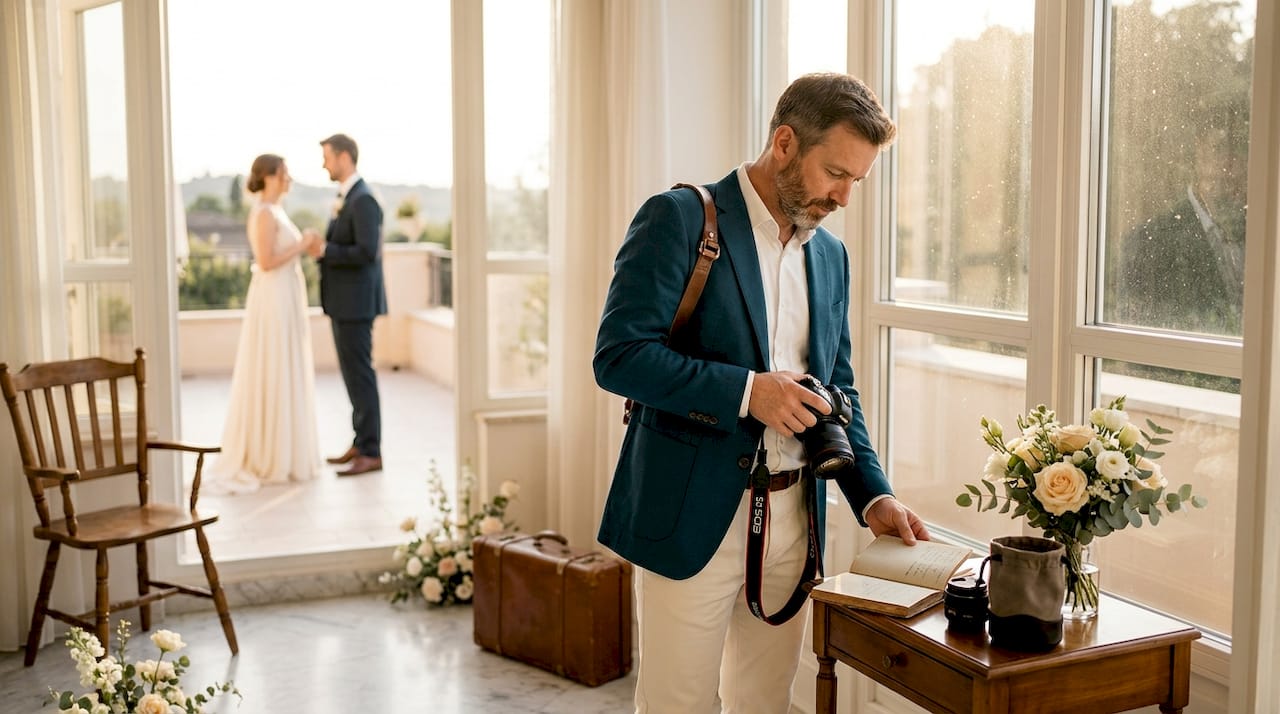
Every couple planning a wedding eventually asks the same question: does the photographer’s equipment matter? It’s a fair question, and the short answer is that why wedding photos require experience not gear is one of the most misunderstood truths in wedding planning. A $10,000 camera body sitting in the hands of someone who can’t read a room will miss the moment your father’s eyes fill with tears. A photographer with ten years of weddings and a mid-range kit will nail it every time. What separates forgettable photos from ones you frame for life is never the tool. It’s the person holding it.
Table of Contents
Key takeaways
Point | Details |
Gear has limits experience doesn’t | No camera can anticipate an emotional moment; only a skilled photographer knows when to be ready. |
Anticipation is the defining skill | Experienced photographers pre-visualize moments before they happen, positioning themselves ahead of time. |
Presence beats perfection | Photos that feel real and unposed are the ones couples treasure most, and those come from experience. |
Consultation reveals true skill | Ask photographers about their approach and experience, not their lens lineup, to find the right fit. |
Storytelling drives lasting memories | The importance of storytelling in wedding photos is what transforms a gallery into a living memory. |
Why wedding photos require experience not gear
Let’s address the myth head-on. Camera manufacturers have done a remarkable job convincing people that the latest sensor, the fastest autofocus, or the widest aperture is what makes a photo extraordinary. Scroll any photography forum and you’ll find debates about which mirrorless system produces the best wedding images. But here is what those debates miss entirely: overwhelming gear options can limit creative output, and progressing as a photographer depends far more on developing a unique vision than on accumulating equipment.
Think about what actually happens at a wedding. The lighting changes every twenty minutes. Guests move unpredictably. Emotions run high and fast. The flower girl drops her basket right as the bride rounds the corner. No amount of high-end glass prepares a photographer to notice that and react in a fraction of a second. That is a skill built over years of showing up, paying attention, and learning how people behave in charged emotional settings.
There are common misconceptions that keep couples focused on the wrong things when evaluating photographers:
Believing that a full-frame camera guarantees professional-quality results regardless of who is operating it
Assuming that a longer lens list signals more experience or preparation
Thinking that high ISO capability solves all low-light ceremony challenges without understanding how to use available light
Confusing a polished, well-designed website filled with gear specs for a strong portfolio of genuine wedding moments
Pro Tip: When a photographer leads their consultation with gear talk rather than showing you their portfolio and asking about your wedding’s emotional tone, that’s a signal worth paying attention to.
A solid gear setup prevents failures that can ruin a wedding shoot, but it does not replace the need to anticipate emotional moments and manage event flow. Backup bodies and batteries matter. But the photographer’s judgment about where to stand during the first dance matters far more.
The experience-driven skills that actually shape great photos
When photographers who have shot dozens of weddings talk about what separates their work from a newcomer’s, they almost never mention gear. They talk about reading the room. They talk about knowing when to step back and when to get close. They talk about the family dynamic they sensed during cocktail hour that told them where the emotional moment would come from during the father-daughter dance.
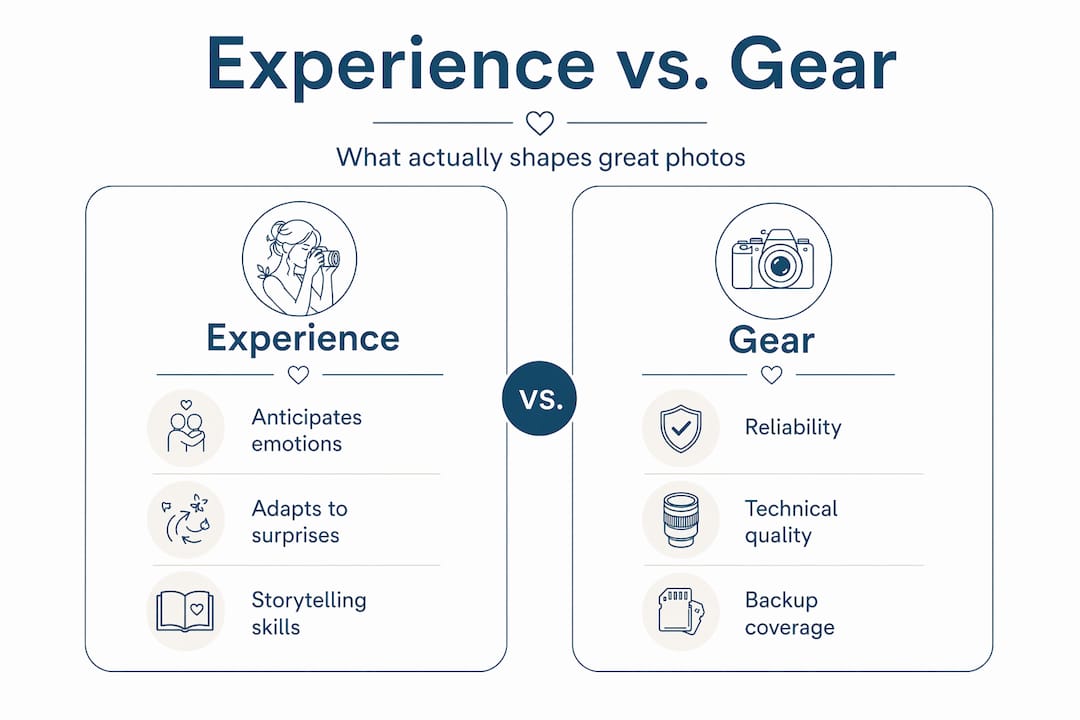
Wedding photographers use pre-visualization to anticipate emotional moments and position themselves accordingly, similar to how wildlife photographers work. You cannot plan for a wildebeest crossing. You study the terrain, read the herd’s behavior, and put yourself in the right spot before anything happens. Weddings work the same way.
Here is what experience actually builds over time:
Anticipation of emotional beats. An experienced photographer walks into a ceremony already knowing where the light will fall during the exchange of vows, and where the mother of the groom will be sitting. They are already there before the moment arrives.
Reading behavioral cues. Experienced photographers rely on subtle signals, a glance between siblings, a trembling lower lip, a groom steadying himself before the doors open, to know where to point the camera before the moment peaks.
Fluid movement through a fast-paced event. Moving through a reception without disrupting it is a physical and social skill. Knowing when to blend in and when to be assertive takes real practice.
Managing portrait time without killing authenticity. Brief 15 to 20 minute portrait sessions yield more natural images than long, forced poses because experienced photographers prioritize atmosphere over rigid shot lists.
Staying emotionally present. This sounds abstract but it is concrete. A photographer who is mentally distracted by technical problems misses the unscripted moment entirely.
“Perfection isn’t what makes a wedding beautiful; presence is. Photographers who observe and anticipate rather than direct every moment create authentic stories felt in the final images.” — Damien Vickers
The importance of storytelling in wedding photos becomes clear when you realize that storytelling is not a camera feature. It is a human one. It is built from knowing when silence in a room signals something is about to happen, and being ready when it does.
Real-world scenarios where experience saves the shot
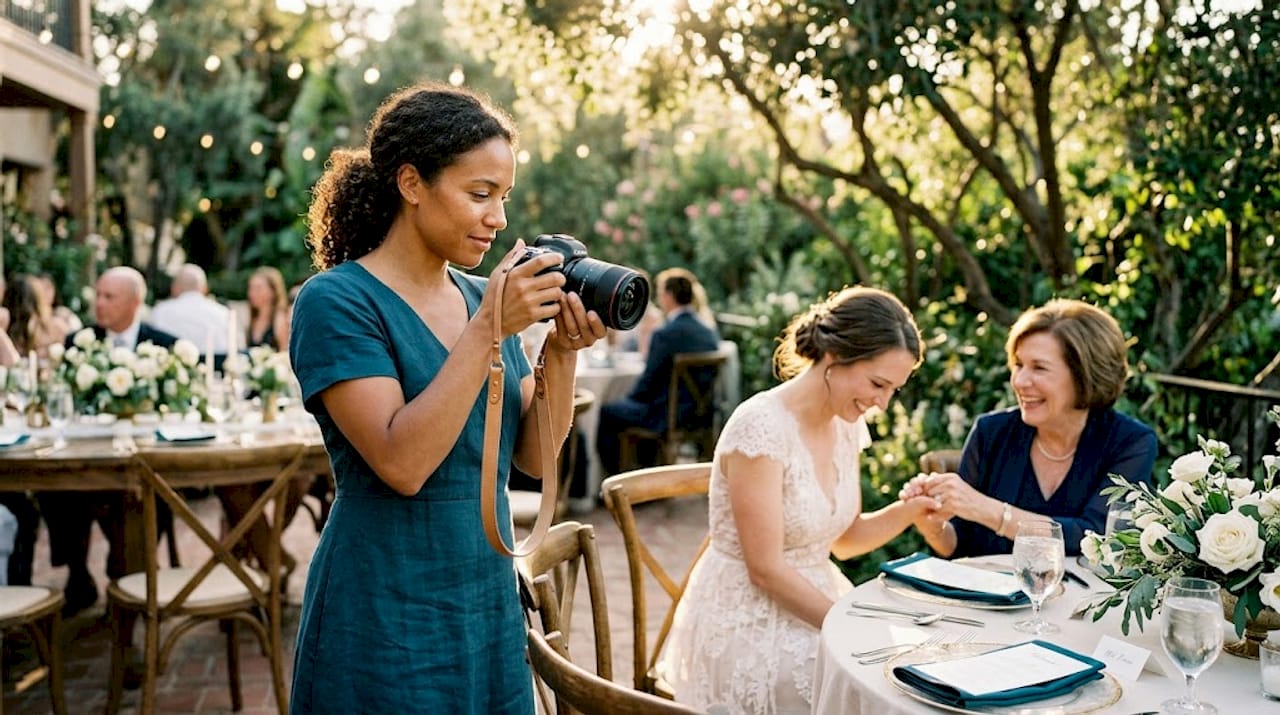
Here is where the gear versus experience debate becomes undeniable. Consider two photographers at the same wedding, same venue, same lighting conditions. One relies on their equipment to handle exposure automatically. The other reads the room, adjusts manually based on where the couple will be standing in thirty seconds, and pre-focuses on the spot where the groom will turn to see his bride for the first time.
Situation | Gear-reliant approach | Experience-driven approach |
Backlit ceremony window | Struggles with exposure blowout, fixes in editing | Scouts location beforehand, positions for the best available angle |
Unpredictable lighting change | Misses shot while adjusting settings | Anticipates transition, already adjusted |
Emotional candid at reception | Captures technically but misses peak expression | Reads the table dynamic, waits for the exact moment |
Fast-moving first dance | Sharp images of dancing but not the connection | Focuses on faces and hands, captures intimacy |
Children running unexpectedly | Reactive, catches action but not emotion | Anticipates unpredictable energy, frames the story |
Most powerful wedding photographs come from candid moments people do not know the camera is capturing. That invisibility, both behavioral and technical, is a skill developed over years of weddings. No lens makes you invisible. Your behavior does.
A minimalist gear kit that focuses on reliability and coverage is genuinely all a skilled photographer needs. Two camera bodies, a small lens set, reliable flash, and backup batteries cover the technical bases. Everything beyond that is diminishing returns without the experience to use it well.
Pro Tip: When reviewing a photographer’s portfolio, look for variety in emotion rather than variety in locations. If every photo feels staged or cinematic but nothing feels spontaneous, that is worth questioning.
Understanding why an experienced photographer matters when things go off-script is especially important when the unexpected happens. Photographers who have been at enough weddings have a mental library of solutions. That is not something any camera body can store.
How to choose a wedding photographer based on experience
Knowing that experience matters is one thing. Knowing how to assess it during a photographer consultation is another. When you sit down with someone you are considering for your wedding, the questions you ask will tell you almost everything.
Start with questions that reveal their philosophy and presence, not their equipment:
“Walk me through how you handled an unexpected challenge at a recent wedding.” A great answer is specific, calm, and focuses on client outcome rather than technical recovery.
“How do you typically approach candid moments during a reception?” Look for language about observation and patience, not about camera settings.
“How long do you prefer for portrait sessions?” Less posed photos in a relaxed atmosphere produce images couples cherish far longer than perfectly styled ones. An experienced photographer will tell you they keep portraits short.
“Can you show me a full wedding gallery, not just highlights?” Highlights are curated. A full gallery shows you consistency, variety, and how they performed when the moments were quiet or awkward.
Signs of a genuinely experienced photographer go beyond their answers. Watch how they talk about their couples. Do they remember details? Do they describe moments rather than locations? Do they ask you questions about your relationship and your families? That kind of engagement tells you everything about how they will show up on your wedding day.
Red flags worth noting: a photographer who talks more about their camera system than their approach, someone who cannot answer what makes their work different from another photographer’s work, and anyone who promises a specific number of photos without discussing the wedding’s emotional story first.
Exploring wedding photography styles before your consultations also helps you understand what kind of storytelling approach resonates with you, which makes the conversation with a photographer far more productive.
My take: what years at weddings actually teach you
I’ve been at enough weddings to say this without hesitation: the photographers who struggle are almost always the ones who trusted their equipment to carry them through.
I’ve watched talented, technically skilled photographers freeze at the moment the flower girl burst into tears mid-aisle because they were adjusting aperture and missed the look the bride gave her groom in response. That look was the story. The gear was ready. The photographer was not.
What years of experience actually teach you is something closer to empathy than photography technique. You learn to feel the emotional rhythm of a day. You learn to recognize that a quiet moment between a bride and her grandmother while the reception dances around them is worth every staged group shot in the catalog. You learn to be still when stillness is what the moment needs, and to move fast when it demands it.
I’ve also learned that authentic, emotionally honest photographs are the ones couples pull out years later to show their children. Not the dramatically lit portraits. The real ones. That is what experience protects. Gear helps you execute. Experience tells you what to execute on.
— Kellie
See your story told the way it deserves to be
If this article has shifted how you think about choosing a photographer, the next step is seeing the difference in action.
Pixelgroves brings years of hands-on wedding experience to every event, from intimate ceremonies on Florida’s Space Coast to large, multi-venue celebrations. The team’s approach starts with listening. They ask about your families, your day, and the moments you most want to remember. Then they show up ready to capture what no shot list could predict. Browse the full wedding portfolio to see authentic, unposed stories from real couples. When you are ready to talk about your wedding, explore pricing and packages and find the approach that fits your day. Your photos will outlast every other detail of this wedding. Make sure they are in experienced hands.
FAQ
Does camera gear matter at all for wedding photography?
Gear matters for reliability and technical coverage, but a solid kit simply prevents failures rather than creating great photos. The photographer’s judgment, timing, and emotional intelligence are what produce images worth keeping.
How does experience improve wedding photo quality?
Experience builds the ability to pre-visualize and anticipate moments before they happen, which means a photographer is already in position when something real and unrepeatable occurs. No amount of equipment replicates that skill.
What questions reveal a photographer’s experience level?
Ask about how they have handled unexpected challenges, how they approach candid moments, and request a full gallery from a recent wedding. Their answers and the consistency of their portfolio will reveal far more than any gear list.
Why do candid wedding photos often feel more powerful than posed ones?
The most powerful wedding photographs come from moments people do not know are being captured. Genuine expressions and unguarded interactions tell the real story of your day in a way a directed pose never can.
How do I know if a photographer prioritizes experience over gear?
Look for photographers who talk about your wedding’s emotional story during consultations, show varied emotional depth in their portfolios, and discuss observation over technical setup. If they lead with lens choices, that tells you where their focus is.
Recommended
Comments