What Is Fine Art Wedding Photography: a Style Guide
Most couples searching for artistic wedding photos assume “fine art” means light and airy presets, heavy editing, or a certain Instagram aesthetic. It doesn’t. What is fine art wedding photography, really? It’s a disciplined, print first approach built on intentional composition, controlled light, and a cohesive visual voice that holds up across an entire gallery. Not just a single stunning frame. Understanding this distinction before you book a photographer could be the difference between a collection you treasure for decades and one that looks dated in five years.
Table of Contents
Key takeaways
Point | Details |
Not just a preset or filter | Fine art wedding photography is a disciplined approach, not a synonym for light-and-airy editing styles. |
Print-first philosophy | Images are crafted to look exceptional as heirloom prints, not just on a phone screen. |
Cohesion over single shots | Review full galleries, not highlight images, to judge a photographer’s true fine art style. |
Expect calm direction | Fine art photographers guide couples purposefully to maintain consistency throughout the day. |
Budget accordingly | Packages often range from $15,000 to $25,000 and include printed keepsakes and multiple shooters. |
What fine art wedding photography actually means
At its core, fine art wedding photography is a curated, print-first approach built around clean composition and intentional use of light. The photographer arrives with a clear visual voice and executes it consistently from the ceremony to the last dance, regardless of what the day throws at them.
This is not about capturing everything as it happens. It’s about crafting images that feel considered. Every frame has a purpose. The background is controlled. The light is shaped or sought out. The subject is positioned with care.
What separates fine art from documentary or editorial styles comes down to philosophy. Documentary photographers follow the moment wherever it leads. Editorial photographers often stage elaborate setups inspired by fashion or magazine work. Fine art photographers do something harder: they blend emotional authenticity with technical discipline, producing images that feel both real and refined.
Here’s what the fine art approach prioritizes:
Repeatability: The style holds across an entire eight-hour wedding day, not just during golden hour.
Cohesive gallery: Every image belongs in the same visual family, with consistent tones, light quality, and composition logic.
Print readiness: Images are edited and composed to look exceptional at large print sizes, not just cropped for social media.
Calm direction: The photographer guides couples and wedding parties with quiet, purposeful instruction to get the frame they need.
Conceptual engagement: Fine art images are crafted for emotional impact, not just documentation.
It’s also worth clarifying what fine art wedding photography is not. It is distinct from gallery exhibition art photography, which exists purely as a creative statement. Fine art wedding photography is still grounded in your actual wedding day. It tells your story. It just tells it with exceptional craft.
Pro Tip: Ask any photographer you’re considering to show you a full wedding gallery from start to finish, not a curated portfolio of their twenty best shots. A true fine art photographer’s gallery should feel like a cohesive book, not a highlight reel.
Visual and technical qualities of the fine art style
The visual signature of fine art wedding photography comes from several deliberate technical choices made before the shutter clicks, not after in editing.
Lighting is the most defining factor. Fine art photographers seek soft, directional light: open shade, window light, or the diffused glow of an overcast sky. They avoid harsh, uncontrolled light that creates unflattering shadows. When natural light isn’t ideal, they shape it rather than fix it in post-processing.
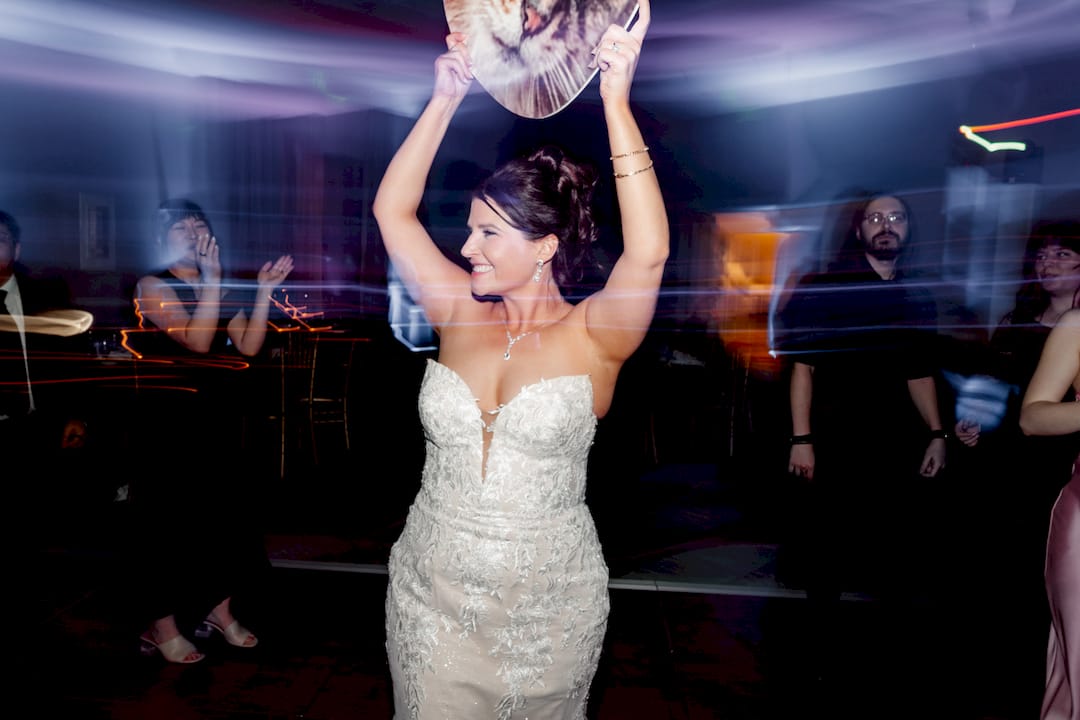
Composition follows classical principles. Negative space is used intentionally. Subjects are placed with awareness of the background, the edges of the frame, and the relationship between elements in the scene. Nothing is accidental.
The editing style leans toward soft, pastel tones and controlled backgrounds that feel timeless rather than trendy. This is a key distinction from “light and airy” photography, which often relies on overexposed whites and heavy skin brightening to achieve its look. Fine art editing is subtler. It enhances what was already there rather than transforming the image into something it wasn’t.
Key technical qualities you’ll recognize in fine art wedding photos:
Clean, uncluttered backgrounds that don’t compete with the subject
Soft, even skin tones with natural color rendering
Controlled depth of field that separates subjects from their environment without being gimmicky
Consistent color grading across all images in the gallery
Minimal retouching that preserves authenticity while maintaining elegance
The discipline required here is significant. Repeatability and consistent quality across varying conditions require technical skill and experience, not just a good editing preset. Any photographer can apply a filter. Not every photographer can control light and composition in a crowded ballroom at 7 PM and produce the same quality frame they captured during the outdoor ceremony at noon.
Pro Tip: When reviewing a photographer’s portfolio, look at their indoor reception photos specifically. That’s where technical discipline shows most clearly, since the lighting conditions are the hardest to control.
How fine art compares to other wedding photography styles
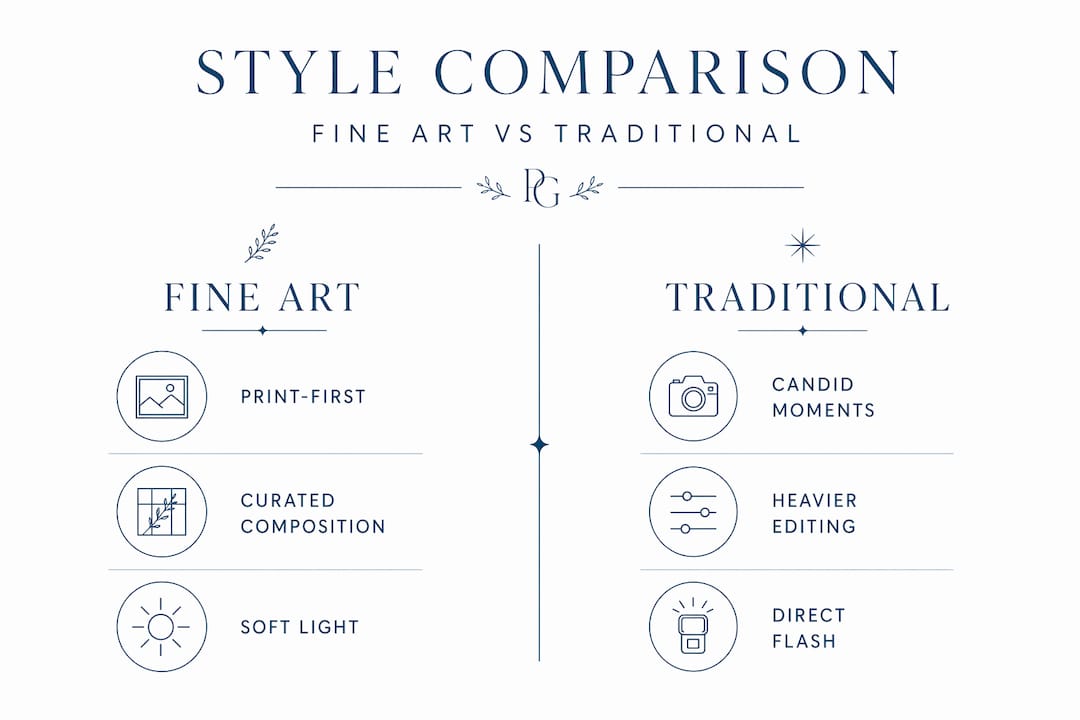
Understanding the difference between fine art and traditional photography styles helps you make a confident choice. Here’s how the most popular approaches stack up:
Style | Philosophy | Editing approach | Mood | Direction level |
Fine art | Print-first, curated, cohesive visual voice | Subtle, timeless, soft tones | Elegant, refined, emotional | High: calm, purposeful guidance |
Documentary | Capture moments as they unfold | Minimal, true-to-life | Raw, authentic, spontaneous | Low: photographer stays invisible |
Editorial | Fashion-inspired, magazine-style staging | Bold, high-contrast, dramatic | Stylized, aspirational | Very high: heavy posing and staging |
Light and airy | Bright, soft, Instagram-friendly aesthetic | Heavy brightening, airy whites | Romantic, dreamy, casual | Moderate: some posing for the look |
The most important insight in that table is the editing column. Fine art is not about heavy post-processing. It’s about getting things right in camera. The industry blend for fine art weddings is roughly 60% documentary, 30% editorial, and 10% fine art detail images. That means a fine art wedding photographer still captures candid moments and real emotions. They just do it within a disciplined visual framework.
Light and airy is the style most often confused with fine art. The difference is in the foundation. Light and airy is primarily an editing decision. Fine art is a shooting and editing philosophy. You can apply a light and airy preset to any image. You cannot apply fine art discipline after the fact.
How to request and prepare for fine art wedding photography
Once you’ve decided fine art is the right fit, the way you communicate with your photographer and prepare for your day matters more than most couples realize.
Ask about style consistency. Request to see two or three complete wedding galleries, not just portfolio highlights. Ask the photographer directly: “Does your style look the same at every wedding, or does it shift based on the venue and light?” A fine art photographer should answer with confidence.
Discuss your venue with intention. Fine art photography thrives in locations with architectural detail, natural light, and clean sight lines. If your venue has busy wallpaper, low ceilings, and fluorescent lighting, talk to your photographer early about how they plan to work within those constraints.
Align your styling with the aesthetic. Hair, makeup, and attire all contribute to the final image. Overly trendy styling can date photos quickly. Fine art photographers often suggest timeless looks: classic silhouettes, natural makeup, and accessories that don’t overpower the frame.
Expect direction, not just documentation. Fine art photographers provide calm, purposeful guidance throughout the day. This isn’t rigid posing. It’s gentle repositioning, suggestions about where to stand, and quiet cues to help you look natural while they get the shot they’re after.
Build buffer time into your schedule. The best fine art images often require a few extra minutes to find the right light or move to a better background. Work with your photographer during planning to identify two or three portrait windows in your timeline where they have room to work without rushing.
Communicate your non-negotiables. Tell your photographer which moments matter most to you. Fine art photographers are selective by nature. Knowing your priorities helps them allocate their attention and creative energy where it counts.
Choosing a fine art wedding photographer
Finding the right photographer starts with knowing what to look for beyond beautiful images.
Gallery cohesion: Photographers who prioritize gallery cohesion over isolated standout shots are the real fine art practitioners. If their portfolio feels like a collection of unrelated “wow” moments, that’s a warning sign.
Process transparency: A strong fine art photographer can articulate their process clearly. They should explain how they approach light, direction, and editing in plain language.
Heirloom products: Many fine art photographers include printed albums or wall art in their packages because their work is designed to be experienced at scale, not just on screens.
Pricing reality: Packages for fine art wedding photography typically range from $3,000 to $7,000 for full coverage with heirloom products. If you see a “fine art” photographer charging $1,500, dig deeper into what that actually includes.
Before signing a contract, ask these questions: How do you handle low-light reception spaces? Can I see a gallery from a venue similar to mine? What does your editing process look like from capture to delivery?
My honest take on fine art wedding photography
I’ve worked with couples at every budget level and across every photography style you can name. What I’ve learned is that fine art wedding photography is the most misunderstood category in the industry, and that misunderstanding costs couples real money and real disappointment.
What I tell every couple I work with: the word “fine art” on a photographer’s website means nothing without the portfolio to back it up. I’ve seen photographers label themselves fine art because they use a Lightroom preset with a film grain overlay. That’s not fine art. That’s a filter.
True fine art discipline shows in the hard frames: the reception dinner with mixed artificial light, the ceremony in a dark church, the family formals in midday sun. When those images look as considered and controlled as the golden hour portraits, you’re looking at a real fine art photographer.
The print-first philosophy is the part I feel most strongly about. Your wedding photos should look extraordinary on a 24-inch canvas on your wall, not just as a thumbnail on Instagram. That standard changes how a photographer shoots, edits, and selects images. It’s the difference between work that ages gracefully and work that looks like a trend from a specific year.
My advice: stop looking at individual images and start looking at how a photographer’s galleries feel as a whole. That’s where the truth lives.
— Kellie Ramsey
See your wedding day through a fine art lens with Pixel Groves
If this article clarified what you’ve been searching for in a wedding photographer, Pixelgroves is worth a close look. As the 2025 Best of Florida Wedding Photographer Award winner, Pixelgroves brings the same print-first discipline and cohesive visual storytelling described throughout this guide to every wedding they photograph.
You can explore their wedding photography styles to see how fine art fits within their full range of offerings, or browse the full portfolio to evaluate gallery cohesion for yourself. When you’re ready to talk numbers, their pricing and packages page lays out exactly what’s included at each level. Pixelgroves also walks every couple through their photography process before booking, so you know precisely what to expect from the first consultation to the final album delivery.
FAQ
What is fine art wedding photography in simple terms?
Fine art wedding photography is a disciplined, print-first approach that prioritizes intentional composition, controlled lighting, and a cohesive visual style across an entire wedding gallery. It is not a preset or editing filter.
How is fine art different from light and airy wedding photography?
Light and airy is primarily an editing style applied after shooting. Fine art is a complete shooting and editing philosophy focused on technical discipline, gallery cohesion, and print quality from the moment the photographer arrives.
What should I look for when choosing a fine art wedding photographer?
Ask to see full wedding galleries rather than portfolio highlights, and look for consistency in light quality, composition, and tone from the first image to the last. Gallery cohesion is the clearest indicator of a true fine art approach.
How much does fine art wedding photography typically cost?
Fine art wedding packages generally range from $15,000 to $25,000 and often include multiple shooters, engagement sessions, and heirloom printed products.
Can I request fine art wedding photography at any venue?
Yes, though some venues are more naturally suited to the style. A skilled fine art photographer can work in challenging light conditions, but sharing your venue details early allows them to plan how to maintain their visual standard throughout your day.
Recommended
Comments