Wedding Reception Entertainment Ideas for an Unforgettable Night
Updated: 2 days ago
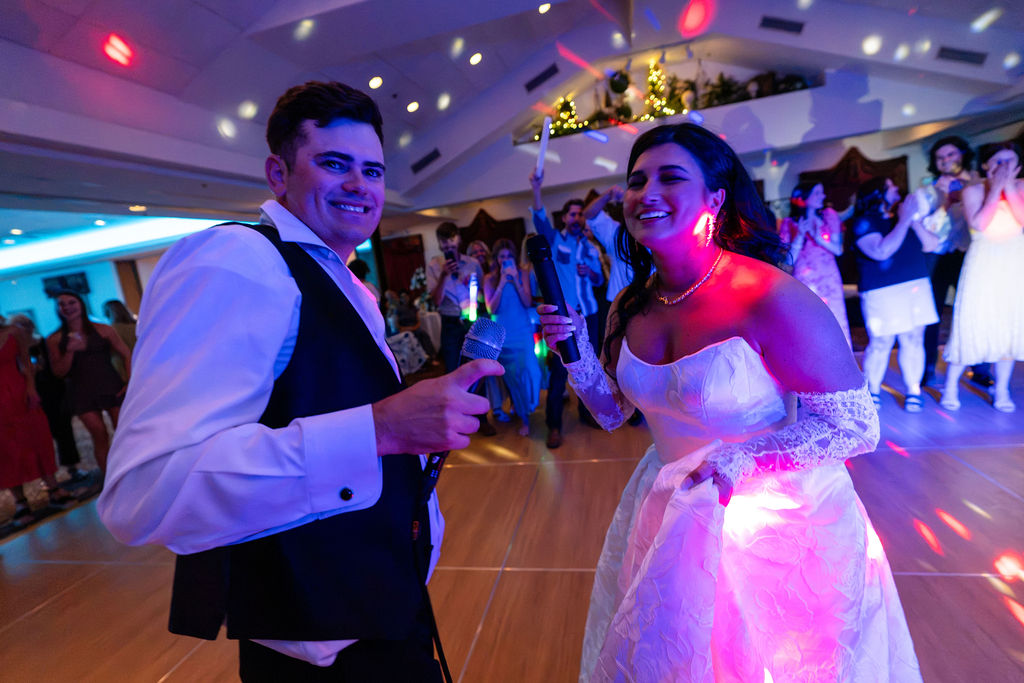
The best wedding reception entertainment ideas combine live music, interactive activities, and well-timed surprise performances to keep every guest engaged from cocktail hour to last call. Entertainment is no longer just background noise at a reception. Couples in 2026 are designing full guest experiences, layering music, games, and live acts across distinct phases of the evening. The right mix turns a standard dinner into a celebration guests talk about for years.
1. What are the top music entertainment options for wedding receptions?
Live music and DJ services remain the two dominant formats for wedding reception entertainment, and each serves a different purpose. Live bands cost between $2,500 and $10,000 or more, while professional DJs average $1,000 to $3,000. That price gap reflects a real difference in atmosphere, not just budget.
Live bands create energy that a playlist cannot replicate. The visual spectacle of musicians on stage, the improvised crowd interaction, and the physical sound of live instruments push guests onto the dance floor faster. A jazz quartet during cocktail hour sets a completely different tone than a pop cover band during peak dancing.
DJs offer flexibility that bands cannot match. A skilled DJ can read the room, shift genres instantly, and accommodate last-minute song requests without rehearsal. Many couples now use a hybrid approach: a live band for the first dance and dinner, then a DJ for the late-night set.
Live band: Best for high-energy dancing, theatrical atmosphere, and larger venues
DJ: Best for wide music range, budget flexibility, and seamless transitions
Hybrid: Best for couples who want both emotional depth and late-night energy
Pro Tip: Book your DJ or band at least 12 months before the wedding date. The best performers in any market fill their calendars fast, especially for peak season Saturdays.
2. Which interactive stations elevate guest engagement during downtime?
Interactive stations are the single most underused tool in wedding entertainment planning. They fill the natural gaps between ceremony, dinner, and dancing without requiring guests to sit and wait. The key is treating each station as a conversation hub, not just a prop.
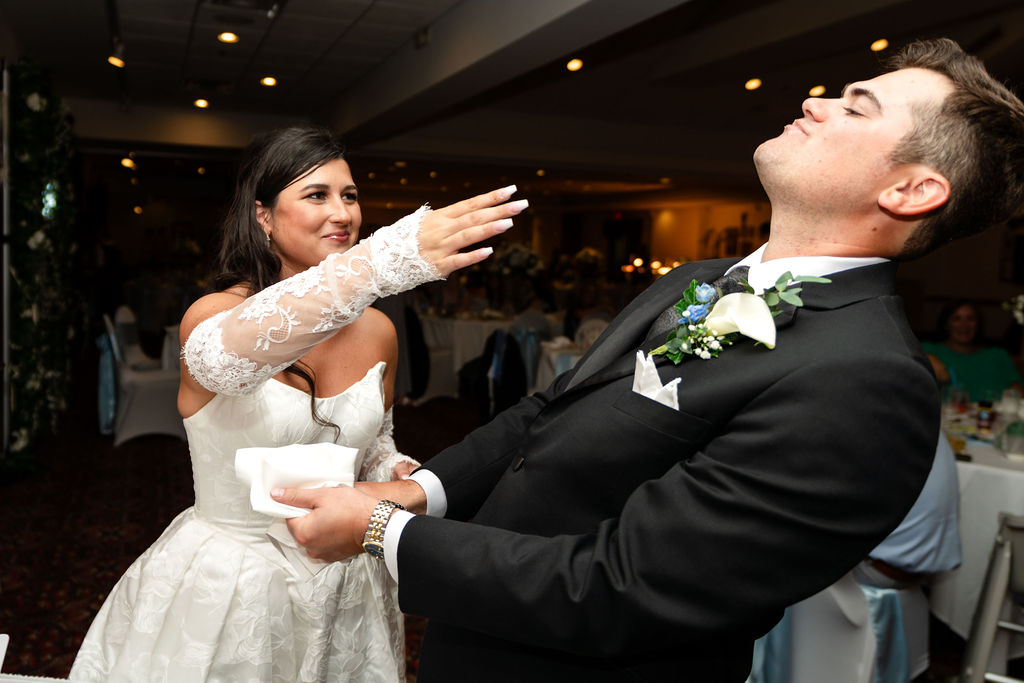
Photo booths remain the most popular interactive option, and for good reason. A well-designed booth with props, custom backdrops, and instant print capability gives guests a physical takeaway. Mosaic photo stations take this further by assembling individual guest photos into a single large portrait of the couple, revealed at the end of the night. For wedding reception photo ideas that double as keepsakes, mosaic stations are hard to beat.
Audio guestbooks and confessional booths add an emotional layer that written guestbooks miss entirely. Confessional booths recording up to 1-minute messages can run continuously throughout the event. Guests record advice, memories, or jokes in private, and the couple receives a full audio album after the wedding.
Games designed for mixed-age groups solve one of the hardest problems in reception planning: keeping both grandparents and college friends entertained at the same time. Bongo Bingo bridges the generation gap by mixing traditional bingo mechanics with high-energy party music. Couples trivia and conversation starter cards work at dinner tables without requiring guests to leave their seats.
Station Type | Best Timing | Guest Engagement Level |
Photo booth | Cocktail hour and dinner | High |
Audio guestbook | Full reception | Medium to high |
Bongo Bingo | Post-dinner transition | Very high |
Couples trivia | Dinner tables | Medium |
Mosaic photo wall | Full reception | High |
Interactive food and beverage stations should run in 45–60 minute windows to manage guest flow and prevent crowding. A taco bar or dessert station that stays open all night loses its novelty. One that opens for a defined window creates urgency and draws guests together.
Pro Tip: Place interactive stations in separate areas of the venue rather than clustering them. Guests naturally move between zones, which keeps the room feeling alive and prevents bottlenecks.
3. What unique live performances and surprise acts can guests enjoy?
Unique wedding entertainment goes beyond hiring a band. Live performers who move through the crowd, appear unexpectedly, or create something in real time generate the kind of moments guests photograph and share without being asked.
Roaming performers work best during cocktail hour and dinner when guests are stationary and open to interaction. Caricature artists, close-up magicians, and strolling musicians all fit this format. Strolling performers like flower fairies are ideal for cocktail hours because they entertain without disrupting guest movement. A magician working a dinner table creates a shared experience for that group without pulling the whole room’s attention.
Headline surprise acts belong in the evening. Fire artists, aerial performers, and live painters work as standalone moments that punctuate the night. A live painter who creates a portrait of the couple during the reception and presents the finished work before the last dance is a format that consistently earns emotional reactions.
The most memorable wedding entertainment moments are almost never the ones guests expected. A 3-minute surprise performance lands harder than a 30-minute scheduled set because it catches people off guard and creates a shared reaction.
Short surprise performances of about 3 minutes have more impact than long scheduled acts. The brevity forces the act to be its best material only, and the unexpectedness amplifies the emotional response. Couples who announce every entertainment element in their program lose the element of surprise entirely.
Cocktail hour: Caricature artists, close-up magicians, strolling string quartets
Dinner: Live painters, roaming comedians, table-side mentalists
Evening highlight: Fire artists, aerial acts, flash mob choreography
Late night: Surprise DJ set, guest karaoke takeover, confetti cannon moment
4. How can couples upgrade the dance floor and late-night entertainment?
The dance floor is the centerpiece of the reception, and most couples underinvest in it. Physical upgrades change how guests perceive and use the space. LED dance floors, cold sparkler machines, and confetti cannons are three additions that consistently increase time spent dancing.
Cold sparklers are the most versatile upgrade. They create a dramatic visual effect during the first dance, the cake cutting, or a surprise song reveal without producing heat or smoke. Confetti cannons work best as a single punctuation moment, not a recurring effect. Overuse kills the impact.
Enhancement | Best Moment | Approximate Effect |
LED dance floor | Full evening | Increases dancing duration |
Cold sparklers | First dance or reveal | Creates a dramatic visual peak |
Confetti cannon | One peak moment | High-energy crowd reaction |
Silent disco | Late night wind-down | Extends party for night owls |
Late-night food truck | After 10 p.m. | Re-energizes guests and extends the event |
Silent discos solve a real problem: noise ordinances and venue curfews. Guests wear wireless headphones and choose between two or three DJ channels. The dance floor stays active, the volume stays controlled, and guests who want to talk can simply remove their headphones. Karaoke hours work on a similar principle, shifting control of the music to guests and creating spontaneous, shareable moments.
Late-night food trucks and snack stations are one of the most underrated fun wedding reception activities available. Guests who have been dancing for two hours are hungry. A taco truck, grilled cheese station, or late-night slider bar that opens after 10 p.m. re-energizes the crowd and signals that the party is not over.
5. What are the best strategies for pacing wedding reception entertainment?
Pacing is the difference between a reception that flows and one that stalls. Successful wedding entertainment pacing uses four phases: cocktail hour, early reception, peak party, and wind-down. Each phase needs a different type of entertainment, and the transitions between them need to be intentional.
The cocktail hour is for roaming performers and interactive stations. Guests are arriving, finding their seats, and socializing. This is not the moment for a loud band or a structured game. It is the moment for ambient music, a photo booth, and a caricature artist working the room.
The early reception covers dinner and the first formal moments: toasts, first dance, and parent dances. Entertainment here should support the emotional tone, not compete with it. A live acoustic set or a string quartet works better than a DJ at full volume.
The peak party phase is when the DJ or band takes over completely. This is the moment for cold sparklers, confetti, and high-energy crowd interaction. Identifying dead zones between dinner and dancing is the key skill here. That 20-minute gap between the last toast and the first dance song is where energy dies if nothing fills it.
Cocktail hour: Roaming performers, photo booth, ambient music
Early reception: Acoustic live music, formal dances, toasts
Peak party: DJ or band at full energy, dance floor upgrades, surprise acts
Wind-down: Silent disco, late-night food, karaoke, guest-controlled playlist
Pro Tip: Layer no more than 2–3 interactive elements across the full reception. Running too many activities simultaneously splits guest attention and dilutes the impact of each one.
Key takeaways
The most effective wedding reception entertainment combines phased pacing, interactive stations, and well-timed surprise acts to keep every guest engaged from arrival to last dance.
Point | Details |
Phase your entertainment | Use four distinct phases: cocktail hour, early reception, peak party, and wind-down. |
Limit simultaneous activities | Run no more than 2–3 interactive elements at once to maintain focus and energy. |
Prioritize surprise over scheduling | Short, unannounced performances create stronger emotional reactions than long planned sets. |
Fill dead zones first | Target the gap between dinner and dancing before adding entertainment elsewhere. |
Match performers to venue phase | Roaming acts suit cocktail hours; headline acts suit evening highlights. |
What I’ve learned about wedding entertainment after shooting hundreds of receptions
Most couples spend months choosing a band or DJ and almost no time thinking about what happens between the music. That gap is where receptions lose momentum. I have photographed weddings where the dance floor was packed all night and weddings where it emptied by 9 p.m. The difference was almost never the band. It was pacing and the presence of interactive moments that gave guests something to do when they were not dancing.
The 2026 shift toward guest experience over photo-perfect moments is real, and it changes how couples should think about their entertainment budget. Spending $500 on a confessional booth and $300 on a caricature artist will generate more genuine guest engagement than upgrading your centerpieces by the same amount.
One thing I tell every couple: do not announce your surprise acts. The moment you put “surprise performance at 9 p.m.” on the program, you have eliminated the surprise. The best reactions I have ever captured on camera came from guests who had no idea what was about to happen. That authentic shock and joy is impossible to stage.
Budget-conscious couples should prioritize interactive stations over headline performers. A well-run Bongo Bingo session costs a fraction of a live band and generates comparable energy. Creative photography that captures those candid interactive moments tells the story of your reception better than any posed shot.
— Kellie
How Pixelgroves captures the moments your entertainment creates
Every great entertainment choice at your reception creates a moment worth preserving. Pixelgroves specializes in capturing exactly those moments, from the shock on a guest’s face during a surprise performance to the full-room energy of a confetti cannon at peak dancing.
[
Pixelgroves holds the 2025 Best of Florida Wedding Photographer Award and brings the same storytelling approach to every reception, no matter the entertainment format. Whether your night features a silent disco, a live painter, or a roaming magician, the Pixelgroves team knows how to position for the moments that matter. Explore wedding photography styles and packages to find the right fit for your reception vision.
FAQ
How much does wedding reception entertainment typically cost?
Live bands range from $2,500 to $10,000 or more, while professional DJs average $1,000 to $3,000. Interactive stations like photo booths and audio guestbooks typically add $300 to $800 per element.
What is the best entertainment for a wedding cocktail hour?
Roaming performers such as caricature artists, close-up magicians, and strolling musicians work best during cocktail hour. They entertain guests without disrupting movement or conversation.
How many entertainment elements should a reception have?
Layer no more than 2–3 interactive elements across the full reception. Running too many activities at once splits guest attention and reduces the impact of each one.
When should surprise performances happen at a reception?
Place surprise acts in the dead zone between dinner and dancing, or as a peak-party moment after the dance floor opens. Short 3-minute surprise acts create stronger reactions than longer scheduled performances.
What is a silent disco at a wedding?
A silent disco uses wireless headphones so guests choose between multiple DJ channels on the dance floor. It extends late-night dancing while keeping venue noise within curfew limits.
Recommended

Comments