How to Feel Comfortable in Wedding Photos
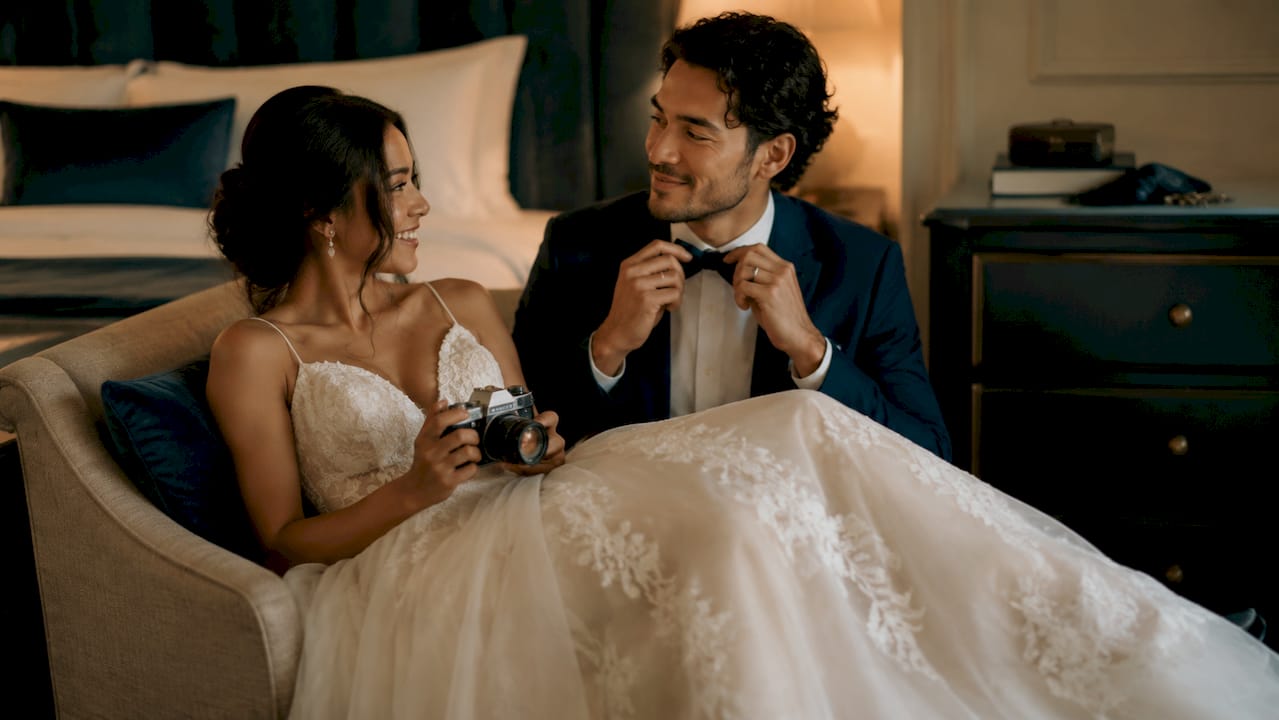
Feeling comfortable in wedding photos is defined by one thing: genuine connection with your partner, not perfect posing. Couples who focus on each other rather than the camera consistently produce more natural, emotional images than those who rehearse poses in a mirror. Photographers like Abby Jiu and KT Merry have built entire careers around this principle. This guide gives you the preparation steps, posing strategies, and mindset shifts that turn photo anxiety into confidence, so every frame tells your real story.
How to feel comfortable in wedding photos before the day arrives
Preparation is the single most effective wedding photo comfort strategy. The couples who look most relaxed in their photos almost always did the work before the wedding day.
Book an engagement session. Pre-wedding photo sessions help couples learn which poses and images they prefer and feel far more relaxed when the wedding day arrives. Think of it as a rehearsal where the stakes are low and the learning is high. You discover your angles, get used to the camera, and build real trust with your photographer.
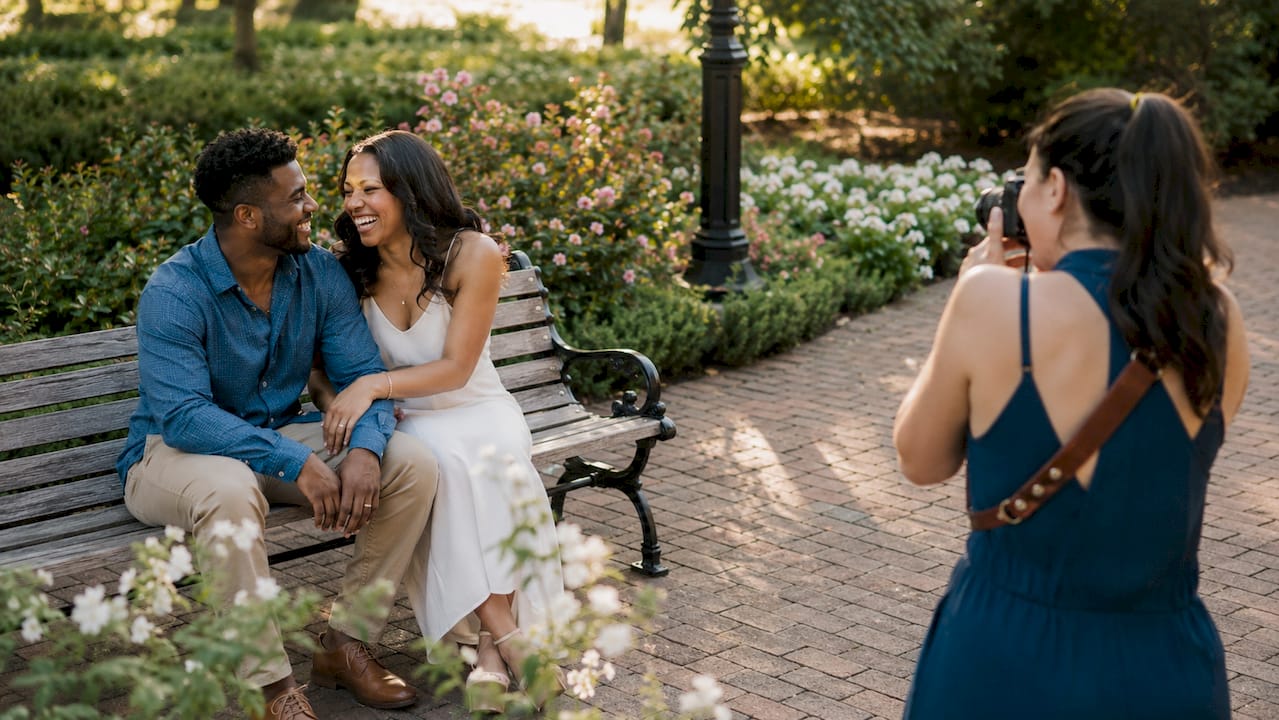
Tell your photographer everything. Sharing personal insecurities about your body, your expressions, or your preferred side gives your photographer the information they need to direct you well. This is not oversharing. It is professional communication that directly improves your photos. A good photographer uses that information to position you in ways that feel good and look great.
Work on your posture before the wedding. Simple exercises like shoulder rolls, core engagement, and standing against a wall to reset your spine make a visible difference. Shifting your weight, lengthening your neck, and standing tall are not vanity moves. They are the physical foundation of a confident silhouette.
Practice at home, but not your smile. Spend a few minutes in front of a mirror moving naturally, not rehearsing expressions. Walk, turn, and look over your shoulder. Get comfortable with the idea of being watched. Practicing smiles before the shoot tends to produce overthought, forced expressions on the day.
Choose attire that feels like you. Getting comfortable in wedding attire means wearing something you can move in, breathe in, and forget about. If your dress requires constant adjustment or your suit feels restrictive, that tension shows up in every photo.
Pro Tip: Ask your photographer to send you a few sample prompts before the wedding so you know what to expect. Familiarity with the process removes a major source of anxiety.
What are the best posing strategies to look natural?
Natural posing in wedding photography is not about memorizing positions. It is about staying in motion and staying connected to your partner.
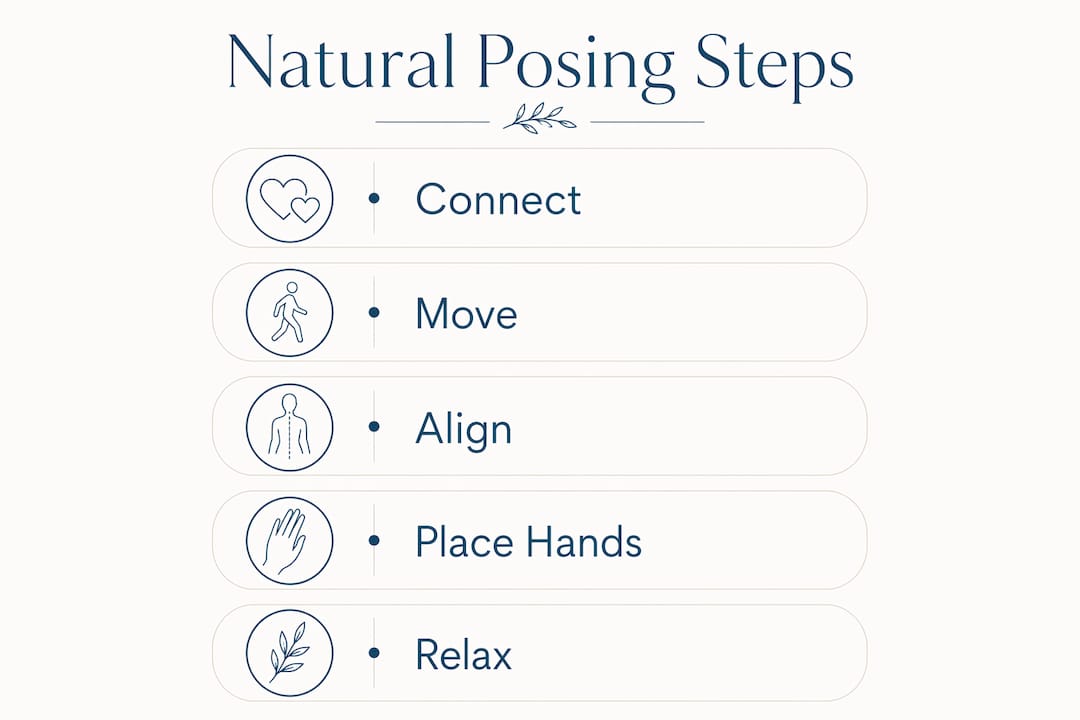
Lead with movement, not stillness
Movement-based prompts like walking, swaying, and whispering reduce stiffness and produce authentic hand placement and facial expressions. When you are moving, your body stops thinking about the camera. A slow walk toward the ceremony, a gentle sway during a quiet moment, or leaning in to whisper something funny to your partner all create images that feel alive.
Align your body for a flattering silhouette
Posture is the foundation of every great wedding photo. Shifting 70% of your weight to your back leg, adding slight bends in your knees and elbows, and rolling your shoulders back improves both your silhouette and your overall image quality. This one adjustment alone changes how a photo reads. It creates depth, softens the body, and signals ease rather than tension.
Solve the hand problem before it starts
Awkward hands are one of the most common complaints in wedding photos. The fix is simple: proper hand placement follows a rule of three. Your hands should always be doing one of three things: holding something (your partner’s hand, a bouquet, a lapel), resting naturally (on a hip, against your side), or touching something (your partner’s face, shoulder, or back). This structure removes the guesswork and makes every pose look more intimate.
Here is a quick comparison of posing approaches and their results:
Posing Approach | Result |
Static, held pose | Stiff body language, forced expressions |
Movement-based prompt | Relaxed posture, genuine emotion |
Forced smile practice | Overthought, unnatural expressions |
Focus on partner | Authentic smiles, real connection |
Assigned hand positions | Confident, intimate-looking photos |
Pro Tip: If you feel stiff mid-shoot, shake out your hands, take a breath, and look at your partner for three full seconds before the photographer takes the next shot. It resets everything.
How can mindset and communication ease photo anxiety?
Camera anxiety is real, and it affects couples at every confidence level. The good news is that the most effective fixes are mental, not physical.
Focus on your partner, not the lens. Authentic emotions in photos come from genuine connection, not from performing for the camera. When you look at your partner, your face does what it is supposed to do naturally. When you look at the camera, you start managing your expression, and that management shows.
Slow down and breathe. Most couples rush through photo sessions because they feel pressure to perform. Taking three slow breaths before a new setup lowers your heart rate and softens your face. Your photographer will notice the difference immediately.
Be open about what you need. Comfort with your photographer correlates directly with natural, confident photos. If a prompt feels awkward, say so. If you need a moment, ask for one. A skilled photographer welcomes that feedback because it helps them get better shots.
Let go of perfection. Natural movements and moments produce the best shots, not flawless poses. The slightly blurry laugh, the happy tear, the unplanned glance are the images couples frame and keep for decades. Chasing perfection in the moment costs you those images.
Trust the process. Simple, clear directions during a shoot reduce pressure and help couples relax. Your photographer has guided dozens of couples through exactly what you are feeling. Let them lead.
Knowing what to expect from your wedding photographer before the day also removes a significant layer of uncertainty. The more familiar the process feels, the less mental energy you spend on anxiety.
What common mistakes cause discomfort in wedding photos?
Most photo discomfort comes from a short list of avoidable mistakes. Recognizing them before the wedding gives you a real advantage.
Holding unnatural poses too long. Staying frozen in a position for more than a few seconds creates visible tension in the jaw, shoulders, and hands. Move between setups rather than holding still.
Over-rehearsing expressions. Practicing your smile in a mirror trains your face to perform rather than feel. The result is an expression that looks calculated instead of joyful.
Ignoring posture. Slouching or standing with weight evenly distributed on both feet flattens the body and reduces the visual interest of a photo. Small posture adjustments produce outsized results.
Disconnecting from your partner. Couples who spend photo sessions looking at the camera instead of each other produce images that feel distant. Your partner is your anchor. Use them.
Wearing attire that does not feel authentic. Outfits chosen for appearance alone rather than comfort create constant distraction. If you are tugging at your dress or adjusting your collar every few minutes, that tension is visible in the photos.
“The best wedding photos are not the ones where couples look perfect. They are the ones where couples look present.” This is the standard worth aiming for.
Reviewing questions to ask your wedding photographer before booking helps you identify whether a photographer’s style and communication approach will actually put you at ease.
Key takeaways
Feeling confident in wedding photography comes down to preparation, genuine connection, and trusting your photographer to guide you through the rest.
Point | Details |
Book an engagement session | Pre-wedding shoots build familiarity with the camera and your photographer before the big day. |
Focus on your partner | Authentic expressions come from connection, not from performing for the lens. |
Use movement-based prompts | Walking, swaying, and whispering reduce stiffness and produce natural-looking photos. |
Assign your hands | Follow the hold, rest, or touch rule to eliminate awkward hand placement in every shot. |
Communicate openly | Tell your photographer your insecurities and preferences so they can direct you with confidence. |
What i’ve learned from watching couples overcome photo anxiety
I have watched hundreds of couples walk into a photo session convinced they are not photogenic. Almost every single one of them was wrong. The couples who struggle most are not the ones who are awkward in front of a camera. They are the ones who are trying hardest to control how they look.
The shift happens when they stop managing their image and start paying attention to each other. I have seen it happen mid-session, sometimes within a single prompt. A photographer asks them to whisper something they love about each other, and suddenly the stiffness disappears. That is not a trick. That is the whole point.
What most articles on this topic miss is that camera comfort is not a skill you build. It is a byproduct of trust. Trust in your photographer, trust in your partner, and trust that an imperfect moment captured honestly is worth more than a perfect pose that feels hollow. The couples with the most beautiful wedding photos are rarely the most practiced. They are the most present.
If you are working with a photographer whose artistic storytelling approach prioritizes authentic moments over manufactured ones, you are already most of the way there. The rest is just showing up and letting yourself be seen.
— Kellie
How Pixelgroves helps you feel at ease on your wedding day
Pixelgroves was built around one belief: the best wedding photos come from couples who feel genuinely comfortable, not couples who are performing for the camera. The Pixelgroves team, recognized with the 2025 Best of Florida Wedding Photographer Award, specializes in creating a relaxed, low-pressure environment from the first engagement session through the final reception shot.
[
Every Pixelgroves package includes a pre-wedding engagement session designed to build real rapport before your wedding day. Their photographers use movement-based prompts, clear communication, and a storytelling-first approach that puts couples at ease naturally. Explore wedding photography styles and packages to find the approach that fits your personality and vision, and see how a photographer who prioritizes your comfort changes everything about the final images.
FAQ
How do i stop feeling awkward in front of the camera?
Focus on your partner instead of the lens. Genuine connection produces authentic expressions far more reliably than any pose or practiced smile.
Should i practice poses before my wedding?
Practice movement and posture, not specific poses or expressions. Pre-wedding engagement sessions are the most effective way to prepare because they simulate the real experience with your actual photographer.
What is the best way to pose for wedding pictures naturally?
Use movement-based prompts like walking, swaying, or whispering to your partner. Keep your hands assigned to hold, rest, or touch at all times to avoid stiffness.
How do i get a natural smile in wedding photos?
Stop trying to smile and start paying attention to your partner. Photographers Abby Jiu and KT Merry both confirm that authentic smiles come from real moments, not from facial rehearsal.
Does my photographer choice affect how comfortable i feel?
Yes, directly. Comfort with your photographer shows up clearly in your images. Ask the right questions before booking and choose someone whose communication style and shooting approach genuinely put you at ease.
Recommended
Comments