How to Evaluate Wedding Photographer Portfolios
Evaluating wedding photographer portfolios is the single most reliable method for determining whether a photographer can capture your wedding day with skill, consistency, and emotional truth. A portfolio is not just a gallery of pretty images. It is a technical record of how a photographer performs under real conditions, across an entire day, in venues and lighting situations they cannot fully control. Knowing how to read that record separates couples who end up thrilled with their photos from those who feel disappointed. This guide gives you a concrete framework for every stage of that review.
What should you look for when you evaluate wedding photographer portfolios?
The foundation of any strong portfolio review is consistency. Consistency in editing, exposure, and storytelling is a stronger indicator of talent than a handful of perfect images. A photographer who delivers ten stunning shots surrounded by mediocre ones has not proven they can carry your entire wedding day.
When you sit down to review a portfolio, look for these specific qualities:
Lighting mastery across conditions. Strong photographers produce clean, well-exposed images in harsh midday sun, dim reception halls, and candlelit ceremonies. If every image in a portfolio was shot in golden-hour outdoor light, that is a gap, not a strength.
Emotional authenticity. Look for candid moments that feel unscripted. Genuine laughter, a parent wiping away tears, a groom’s face when the doors open. These images cannot be staged, and their presence tells you the photographer knows how to disappear into a crowd.
Skin tone accuracy. Poor skin tone rendering indicates gaps in both shooting technique and post-processing skill. Check that skin tones look natural across different complexions and lighting environments, not orange under tungsten light or gray in shade.
Venue and scenario variety. Portfolios limited to one or two venue styles suggest a photographer who struggles outside their comfort zone. You want evidence of ballrooms, outdoor ceremonies, small chapels, and crowded receptions.
Coverage depth. Look for detail shots of rings, florals, and table settings alongside portraits and ceremony coverage. A photographer who only shoots people misses half the story of your day.
Pro Tip: When reviewing a portfolio, cover the photographer’s name and imagine you received these images from a friend. Would you be genuinely impressed, or are you giving extra credit because of the brand? That mental reset cuts through marketing bias fast.
How to assess portfolio relevance by reviewing recent and full wedding galleries
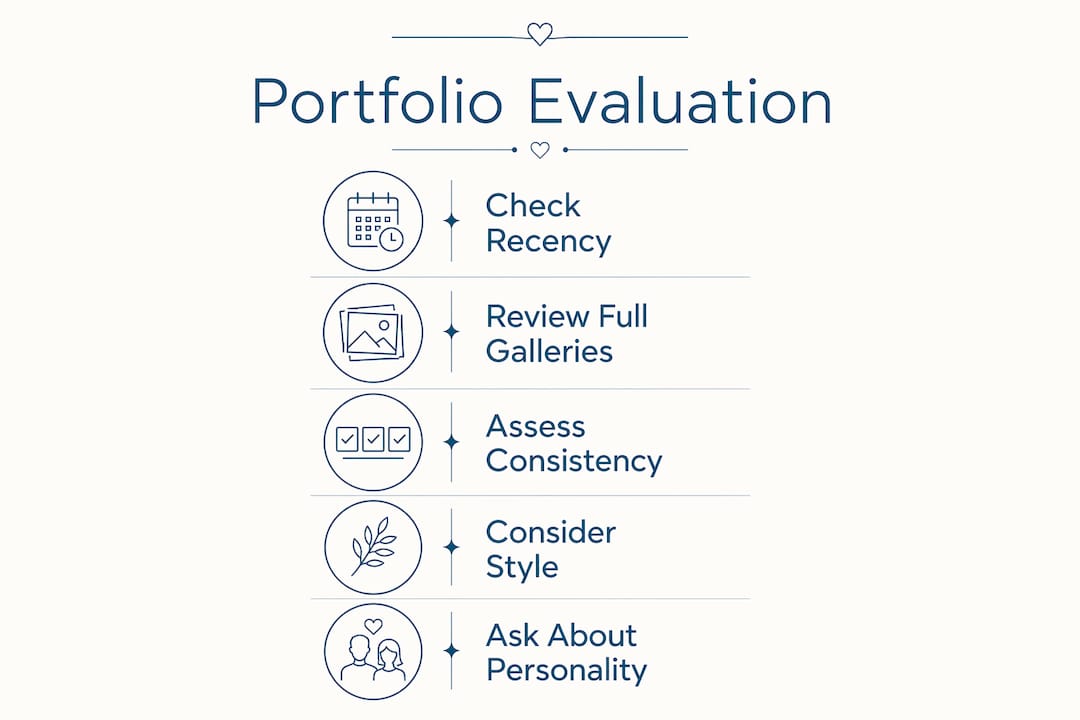
Recency matters more than most couples realize. Portfolios featuring older images may not represent the photographer’s current capabilities or editing style. Camera technology, editing software, and stylistic trends shift quickly. Prioritize work produced within the last 12 to 18 months when forming your opinion.
The more important distinction, though, is between highlight reels and full wedding galleries. Highlight reels show you a photographer’s best 30 to 50 images. Full galleries show you what you will actually receive. Full wedding galleries reveal how photographers perform throughout the entire day and across a range of conditions, not just during the golden hour portraits.
What you see | What it actually tells you |
Highlight reel of 40 images | Best-case output only; hides weak coverage periods |
Full gallery of 400 to 600 images | Real delivery quality, consistency, and coverage depth |
Work from 3 or more years ago | May not reflect current style, gear, or editing approach |
Work from the last 12 to 18 months | Accurate picture of current skill and aesthetic |
Single venue type repeated | Limited adaptability to different environments |
Multiple venue types and conditions | Proven flexibility and technical range |
Ask photographers directly: “Can I see a full gallery from a recent wedding at a venue similar to mine?” A confident professional will say yes without hesitation. Reluctance to share full galleries is a warning sign on its own. If your wedding is in a dimly lit historic venue, request a gallery from a comparable setting, not a bright outdoor estate.
Pro Tip: Ask to see a full gallery from a wedding held in a similar season to yours. Winter receptions and summer outdoor ceremonies present completely different lighting challenges, and you deserve proof the photographer handles both.
What red flags should you watch for in a wedding photographer’s portfolio?
Knowing what to avoid is just as valuable as knowing what to seek. Several portfolio patterns consistently predict a disappointing experience.
Inconsistent image quality within the same event. If ceremony shots are sharp and well-lit but reception images look grainy and flat, the photographer likely struggles with artificial light. Your reception will not fix itself.
Heavy filtering that obscures detail. Filters come and go, but genuine photographic skill is timeless and visible without masking. Extreme presets, blown-out whites, or heavy vignetting can hide soft focus, poor exposure, and color problems. Ask to see unfiltered or lightly edited samples.
Watermarks covering key image areas. Watermarks for branding are normal. Watermarks positioned directly over faces or critical composition elements suggest the photographer does not want you examining those areas closely.
No work from the last 18 months. This is a concrete signal that the photographer either has not been active or is hiding a style shift. Neither is reassuring when you are booking a year out.
Vague or evasive answers about contracts. A professional photographer has clear written terms covering copyright ownership, image delivery timelines, backup equipment policies, and what happens if they face an emergency. Vague answers to direct questions about these topics indicate either inexperience or a pattern of disputes.
Reluctance to share full galleries. This is worth repeating because it is that important. Any photographer unwilling to show you a complete wedding gallery is asking you to buy a product you cannot fully inspect.
Pay attention to how a photographer communicates during your initial inquiry. Slow responses, generic answers, and an inability to discuss their process in specific terms are behavioral red flags that no amount of beautiful imagery can offset. You can find more on common hiring mistakes that couples make when they focus only on the photos and ignore these signals.
How to combine portfolio evaluation with personality and practical factors
Portfolio quality gets you to the shortlist. Personality fit and practical details get you to the right hire. Here is a structured approach to the final evaluation stage:
Schedule a video call or in-person meeting. Personality fit with your photographer is critical since they spend more time with you on your wedding day than almost any other vendor. You need to feel comfortable being directed by this person during emotional, high-pressure moments.
Read reviews with a specific filter. Do not just count stars. Look for mentions of how the photographer handled unexpected changes, vendor conflicts, or timeline delays. Reviews that describe stress management and adaptability tell you far more than “the photos were beautiful.”
Confirm contract specifics before signing. Verify copyright terms, the number of edited images delivered, the delivery timeline, and backup plans if the photographer is incapacitated. These are not paranoid questions. They are standard professional expectations.
Book 9 to 12 months in advance. Popular wedding dates see early bookings, and waiting limits your quality choices significantly. If you find a photographer whose portfolio and personality both impress you, move quickly.
Trust your gut after doing the work. Once you have reviewed full galleries, checked reviews, and had a real conversation, your instinct carries weight. The couple-photographer personality match directly impacts how comfortable and natural you feel on the day, which shows up in the final images.
Pro Tip: Before your meeting, write down three specific moments from your wedding day that matter most to you, whether that is the first look, the father-daughter dance, or the cake cutting. Ask the photographer how they approach each one. Their answer reveals both their experience and their listening skills.
For a deeper look at balancing quality with budget, the Pixelgroves guide on choosing within your budget walks through exactly how to prioritize when you cannot afford every photographer on your shortlist.
Key takeaways
Selecting the right wedding photographer requires evaluating portfolios for consistency, recency, and full-day coverage, then confirming personality fit and contract clarity before committing.
Point | Details |
Consistency beats single great shots | Look for even quality across an entire gallery, not just standout images. |
Prioritize recent, full galleries | Request complete wedding galleries from the last 12 to 18 months for an accurate picture. |
Red flags are behavioral too | Vague contracts, slow communication, and hidden galleries signal problems beyond the photos. |
Personality fit shapes your day | Your photographer’s demeanor directly affects how natural and relaxed you feel on camera. |
Book early to protect your options | Securing a top photographer 9 to 12 months out prevents losing your first choice to another couple. |
What I’ve learned from watching couples choose the wrong photographer
I have seen couples walk away from a photographer with a genuinely stunning portfolio because something felt off in the meeting. Every time, that instinct proved correct. I have also watched couples ignore obvious red flags because the highlight reel was breathtaking, and they ended up with 200 usable images from a 10-hour wedding day.
The most underrated skill in this process is learning to read a full gallery the way a photo editor would. You are not looking for your favorite image. You are looking for the weakest image and asking whether you can live with it. The floor of a portfolio matters more than the ceiling, because the floor is what you will actually receive across your entire wedding day.
I also push back on the idea that style is the primary filter. Style is easy to copy and easy to fake in a highlight reel. What cannot be faked is the ability to capture a genuine emotional moment in a dark reception hall at 9 p.m. when the DJ lights are the only source of illumination. That is where real skill separates from good marketing.
One more thing: do not apologize for asking hard questions. Asking to see a full gallery, requesting references, or asking what happens if the photographer gets sick the morning of your wedding is not rude. It is responsible. Any photographer who makes you feel difficult for asking those questions is telling you something important about how they will treat you as a client.
— Kellie
See Pixelgroves’ portfolio and find your photography style
Pixelgroves has earned the 2025 Best of Florida Wedding Photographer Award by doing exactly what this guide describes: delivering consistent, emotionally rich coverage across every type of wedding, venue, and lighting condition.
[
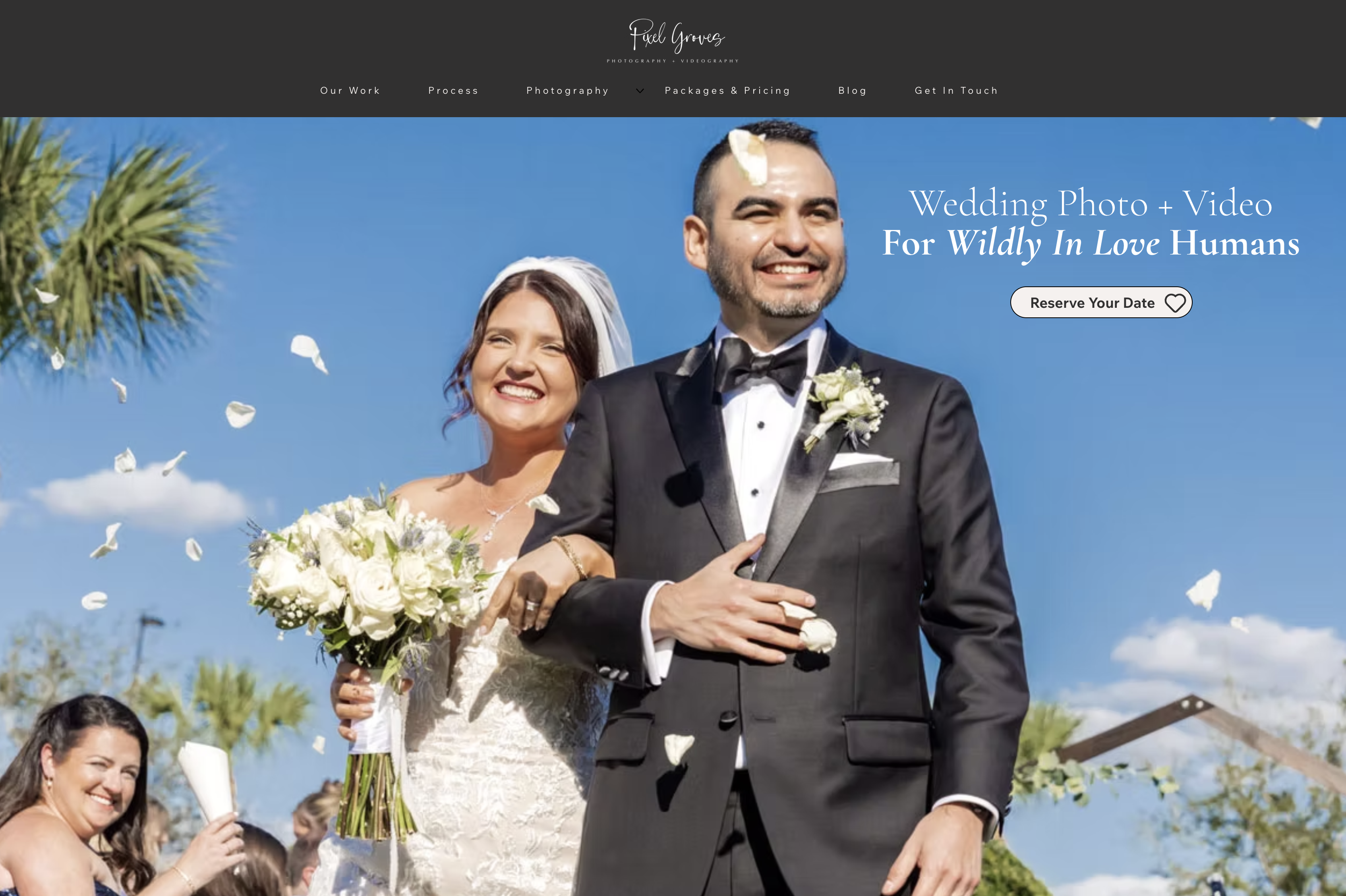
If you are ready to apply what you have learned, start by exploring the full range of wedding photography styles that Pixelgroves offers. From documentary-style storytelling to fine-art portraiture, their portfolio gives you real examples of what expert consistency looks like across complete wedding days. You can also review their pricing and packages to understand exactly what is included, and visit the process page to see how they approach every wedding from first contact to final delivery.
FAQ
What makes a wedding photography portfolio strong?
A strong portfolio shows consistent quality across an entire wedding day, not just in ideal lighting. Look for even exposure, natural skin tones, emotional candid moments, and coverage across ceremony, reception, and details.
Should I ask to see full wedding galleries, not just highlights?
Yes. Full galleries reveal how a photographer performs throughout the entire day, including during low-light receptions and high-pressure moments that highlight reels routinely omit.
How recent should a photographer’s portfolio work be?
Portfolio work should come from the last 12 to 18 months. Older images may not reflect the photographer’s current editing style, equipment, or technical skill level.
When should I book a wedding photographer?
Book 9 to 12 months before your wedding date. Popular dates fill early, and waiting significantly limits your access to top-rated professionals.
Does personality fit really affect the final photos?
Directly. The couple-photographer dynamic shapes how relaxed and natural you appear on camera. A photographer you trust and feel comfortable with will capture more authentic moments than one you feel tense around.
Recommended
Comments